It’s official, Summer is here in South Florida, which means fun in the sun! However, as the summer heats up, so does iguana activity. Families will enjoy time in pools, beaches, parks, and boats, but these activities might include some unwelcome guests. Iguanas! These invasive reptiles have become a nuisance for many outdoor activities throughout South Florida. Having iguanas around your property can become frustrating, especially if they are defecating in your pool or on your boat. Some of the issues associated with invasive iguanas include health risks, plant damage, and burrowing, just to name a few. Have you ever considered the possibility of finding iguanas in your toilet? Only in Florida! But there is hope.
Keep Iguanas Away and Stop The Infestation
Since the 1960s, iguanas have made Florida their second home after arriving through the pet trade market. The first sightings of invasive iguanas were in Coral Gables, Hialeah, and Key Biscayne. When iguanas became too much to handle, many pet owners released them, or they escaped from their enclosures. Many locals are actually unaware that iguanas are categorized by the Florida Fish and Wildlife Conservation (FWC) as an invasive species and that they are originally from Central and South America. Similar to the Burmese Python and the lionfish, iguanas can inflict significant damage on our region. What makes iguanas invasive in Florida? Invasive species reproduce quickly, compete with native species for food, disturb breeding and nesting areas, have no natural predators, and affect the economy. Iguanas can lay 20–70 eggs a year, which makes it hard to control their population. Florida has three types of iguanas: the Green Iguana, Black Spiny Tail Iguana, and Mexican Spiny Tail Iguana. Once these iguanas find their way onto your property, they adapt and thrive on certain vegetation. Transporting iguanas from one property to another is prohibited by law and can actually result in the spread of infestations.

Damages Caused By Iguanas
Think iguanas just eat grass and go about their day? Think again! These invasive reptiles cost homeowners and businesses thousands of dollars each year in damages. In West Palm Beach, burrowing activities caused a dam to collapse, costing the city 1.8 million dollars in repairs. Over time, iguana burrows start to erode from rain or water runoff, causing the terrain to soften and collapse. This can become problematic for seawalls and infrastructures in Florida as the repair costs are very high. When installing new plants, consider choosing ones that iguanas don’t eat. You can also remove the iguanas before they devour your new tropical oasis. Iguanas are herbivores, meaning they mostly eat plants, fruits, and flowers. We’ve witnessed thousands of dollars invested in flowers devoured in one week at a luxury home in Star Island.
Iguanas In Attics?
Iguanas ending up in attics can happen more often than you might think. Ever hear something running back and forth inside the attic during the day? Most likely, it’s an iguana! Like humans, iguanas are diurnal, meaning they are active during the day and sleep at night. If you have a damaged roof, these invasive reptiles will make this location their new residence. During the day, they will be searching for food and water around your property, but at night they will find shelter. Attics are a perfect spot for iguanas to call home and use it to hide from humans and native predators. Thinking about patching up the damaged roof? Make sure to have iguanas removed from your attic to avoid rotting smells in your home. It’s important to be vigilant and fix any roof damage to keep out critters of South Florida.

Iguanas = Health Risks
There are many health risks associated with having iguanas lurking around properties. Iguanas can spread viruses which is a concern for humans and pets. While iguanas sunbathe, walk, eat, and sleep, they defecate, which ultimately leads to messy situations. Iguanas, in our opinion, are prolific defecator’s, splattering feces all over the place, especially on roofs while they sunbathe. When it rains, iguana poop washes off of your roof and makes its way down, causing it to scatter everywhere. If they are in your attic, they are most likely defecating there as well! Over time, iguana poop can grow mold. This is where salmonella becomes a concern for many. We have seen public parks, playgrounds, and sidewalks covered in iguana feces. Kids and pets are most at risk since they are usually curious. Dog owners have spent thousands of dollars on vet bills due to these bacteria. Iguana feces should be washed off immediately & sanitized to avoid any potential health risks. Ticks and mites can also be found on iguanas which can spread rapidly since iguanas travel from property to property. Both ticks and mites carry diseases which is another health risk for humans & pets. It’s important to treat any areas where ticks and mites are found due to iguanas to avoid further complications.
Economical Disaster
Thriving since the 1960s, iguanas have multiplied in large numbers, which in our opinion are in the millions. Florida is a very large state and may have areas where iguanas have not been located. Damages to local agriculture and structures have become a concern for many counties and municipalities. Cities in Miami-Dade County hired iguana control companies to eliminate the infestation of iguanas. Miami Beach and Key Biscayne are some of the cities that have implemented iguana control measures. Damages to roads, sidewalks, and structures have been attributed to iguana burrowing activities. Iguanas dig burrows during the breeding season to lay their eggs, which can range between 20–70 eggs per year. Over time, iguana burrows can erode due to water runoff which in return can cause damage to foundations & structures. Iguanas have caused economic damage to local landscaping nurseries by destroying plants and fruits on large areas of land. Tourism destinations have also felt the damaging effects of iguanas! From closing pools due to iguana feces to damages of flora, these issues have become all too common. Incorporating iguana control beforehand can ultimately save taxpayers, landscape nurseries & tourist destinations’ money in the long run.

Fun In The Sun!
After the phenomenon of falling iguanas, the real party begins! Being cold-blooded reptiles, iguanas become very active during the hot summer months. For Floridians, cooling off at the beach or pool is a must during the hot months. However, these fun summer activities may lead to encounters with uninvited guests, iguanas! It can be frustrating to have a pool party only to find an iguana or their feces in the swimming pool before the party starts. Now you have to clean the pool yourself or wait for a pool technician to clean and sanitize the water. Boat owners are also negatively impacted by iguanas. There’s nothing like waking up early to head out for a full day of fun on the boat, until you find an iguana or their feces on your clean boat. Encountering an iguana on your boat while you’re already on the water can cause panic for those not fond of these reptiles. Damage to boats is also a common occurrence. Iguanas have sharp nails which can damage upholstery and paint. If iguanas have defecated on your boat, it should be washed off quickly since the acidity of their feces can damage paint and upholstery. Summer can still be a fun adventure but make sure iguanas are not invited to the party!
Solutions? We Have Some!
Homeowners can implement iguana deterrent methods to keep these reptiles at bay. Iguanas use their sharp nails to climb, so cutting back overgrown brush can prevent them from accessing your property. To keep iguanas off your roof, trim back limbs and palm fronds to restrict their access. We use clear wraps around trees, dock pilings, fences, and gardens to provide a smooth material that prevents iguanas from gripping surfaces with their nails. Deterrent sprays are effective, but require constant reapplication in areas where iguanas frequently pass. We use an organic blend of oils and herbs to deter iguanas as they dislike the taste. When installing new landscaping plants, it’s important to incorporate plants that iguanas do not eat, and these plants can be added to existing gardens as well. If iguana burrows are found on your property, covering the hole may not work since baby iguanas can dig around the hole covered. It is advisable to call a professional iguana removal company to remove iguana eggs which will prevent hatching and further infestation. Implementing these methods can effectively keep iguanas away and prevent further infestations.
Humane Iguana Control
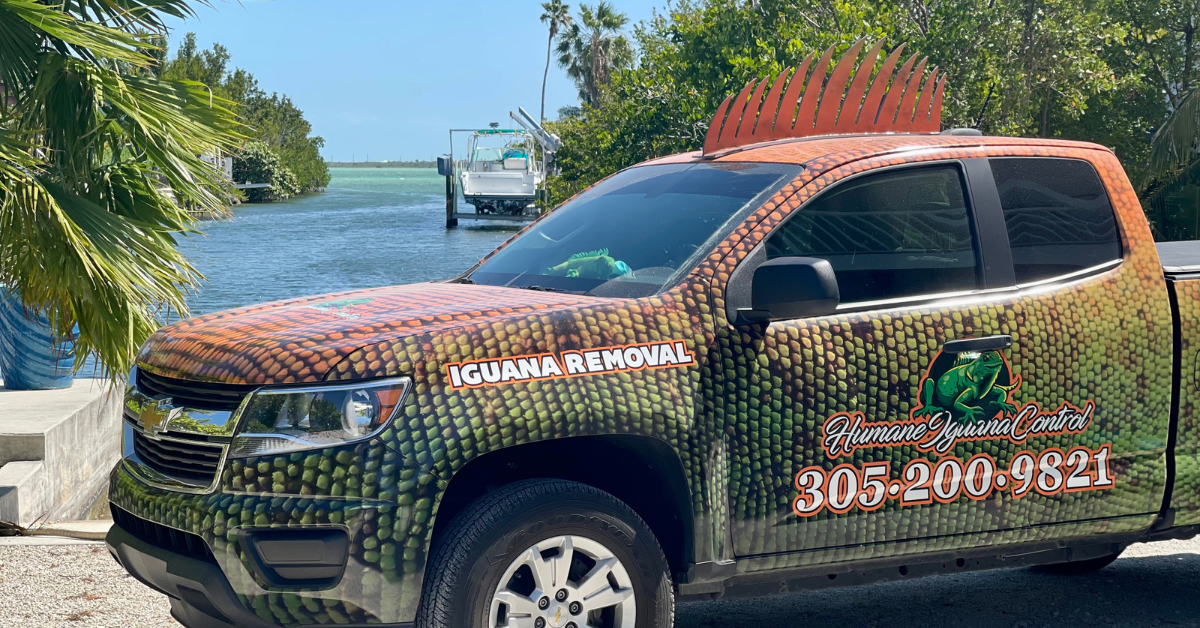
Even though iguanas are cool-looking reptiles, they have caused significant damage throughout South Florida. Our team at Humane Iguana Control addresses the frustrations of residents, schools, businesses, and property managers by providing effective solutions. We started Humane Iguana Control to protect our native species and bring peace of mind to people in South Florida. Our experts conduct thorough property assessments to determine the most appropriate removal methods. Assessing the property is crucial for successful removal, involving checks for damage, iguana feces, burrows, and iguanas on roofs. Properties with dense vegetation present challenges due to iguanas’ excellent camouflage abilities. We introduced “Night Time Iguana Removal” to find iguanas sleeping on trees at night, especially in areas with many trees. Our methods include trapping, pole snares, and hand captures. Our ultimate goal is to assist South Florida in controlling the invasion, benefiting both residents and native species alike.