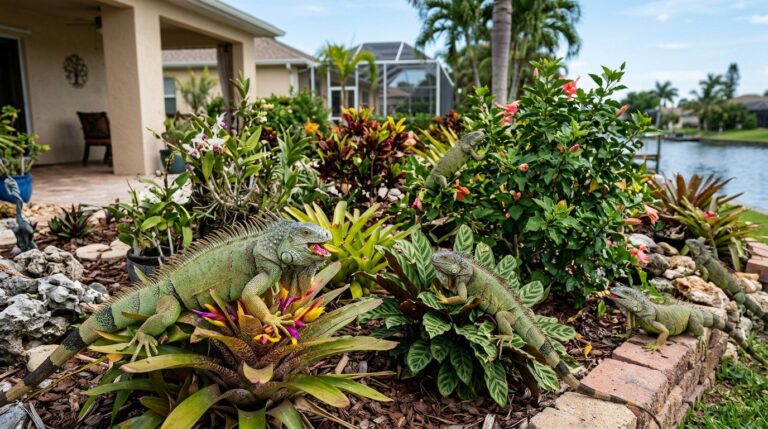
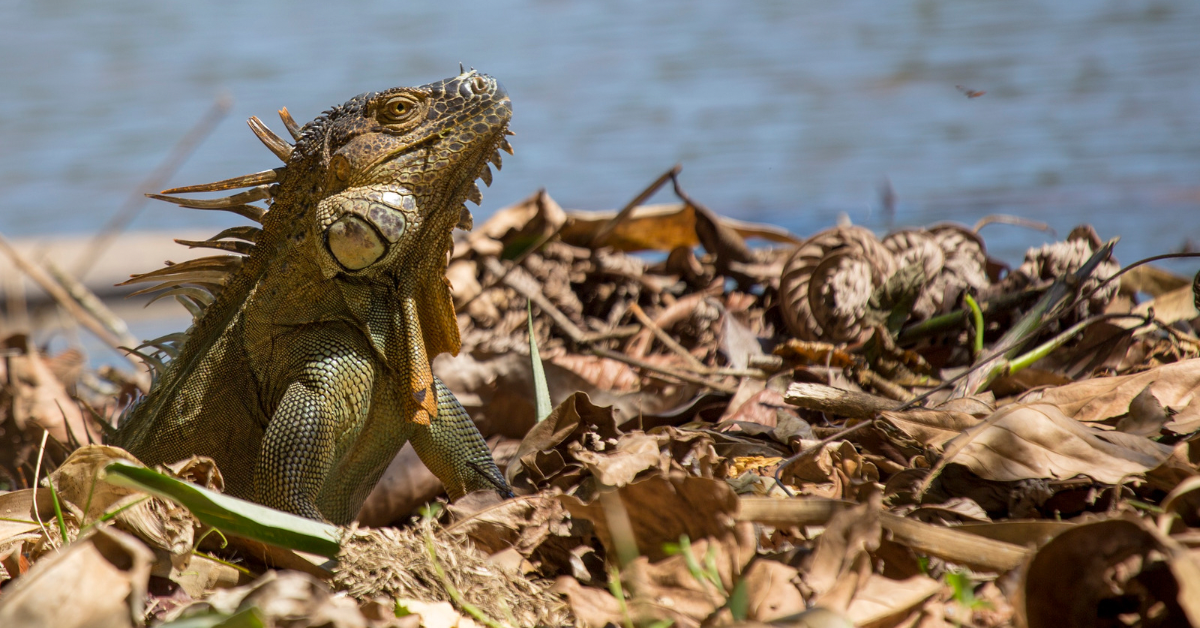
During the breeding season in Florida you will most likely come across iguanas digging holes. These holes are actually burrows that iguanas dig to lay their eggs. Reaching long lengths, these burrows can become problematic if they are not addressed immediately. With time, iguana burrows can soften the terrain, which can cause bodily harm and damage to property because of erosion. It’s important to be visually aware if you have iguanas on your property, and to address burrows accordingly.
Iguanas Digging Holes:
Iguanas, like most reptiles, have a breeding season which falls around March in Florida. During this time a year, if you have iguanas around your property, you will find random holes in various parts of your property. Iguanas will dig holes to create burrows in order to lay their eggs. Many residents of South Florida are unsure if the holes found on their property are caused by iguanas, raccoons or land crabs. Identifying iguana holes is quite simple. Since iguanas use their front legs to dig, they will create a half circle shape. Also, there will be a mound of dirt in front of the hole from the iguana digging. Once the hole and burrow are dug out, you will also find tail marks on the mound because of the iguana going in and out of the burrow.

Are These Holes Dangerous?
Holes dug by iguanas can indeed be dangerous to humans and pets. Iguanas will begin digging hoping the soil is soft, but they might run into concrete or coral rock. Here, they will continue digging holes until they find a preferable location that is easy for them to complete their burrow. Burrows of iguanas can reach a long distance of 70 feet and may have interconnecting tunnels. These burrows can eventually collapse because of erosion caused by irrigation, rain & water runoff. If burrows collapse, the ground can become unstable, which can cause bodily harm to humans and pets. Iguana burrows can also expose pipes which can be dangerous if the pipes carry electrical gables, water pressure, flammable liquids such as natural gas. It’s important to monitor iguanas and their digging habits to avoid property damages and personal injuries.
Iguana Burrows Can Cause Property Damage:
In Florida, properties and structures have been affected negatively because of iguanas digging burrows. These invasive reptiles can cause extensive damages to seawalls, sidewalks, dams and roads. Recently, a homeowner in Miami contacted us because of iguanas digging underneath their artificial turf. This caused the turf to become unleveled, resulting in costly repairs since it has to be removed in order for it to be repaired. Waterfront homes are at high risk of having their properties damaged because of easy access for iguanas. They use docks and pilings to climb onto properties. Roads next to canals that are infested with iguanas are also at high risk and can collapse due to burrows collapsing. Repairs to structures can be very costly, which is why we recommend having iguanas removed.

Iguanas Dig Holes To Lay Eggs:
Female iguanas will establish themselves on your property and will feed off of certain plants and they will also locate a water source to drink from. Once their eggs are ready, female iguanas will locate moist areas for the eggs to survive. Female iguanas can lay up to 70 eggs in one year if the environment is suitable. Not all of the 70 eggs will hatch, but enough will survive to begin to infest your property. Typically, it takes anywhere between 90 to 120 days for the eggs to hatch. Once they hatch, baby iguanas will dig themselves out to begin their life cycle. These baby iguanas have a big appetite so do not be surprised if certain tropical plants around your home lose their leaves and flowers.
Native Species Impacted:
The South Florida region has many native species that dig burrows to lay their eggs. The only difference is native species will not typically lay their eggs in busy urban neighborhoods. Animals such as the burrowing owl will dig burrows in empty fields and embankments where the eggs will be safe. The gopher tortoise will lay their eggs in burrows in sandy areas which have ideal conditions for their eggs to hatch. Iguanas find these burrows and make it their new home, which in return displaces out native species. If there are eggs from native species, they will most likely be destroyed by iguanas in order for iguanas to lay their own eggs. Iguanas will also use these burrows for shelter, which will deter native species from entering. This occurrence can reduce the success rate and population of burrowing owl and gopher tortoises.

Preventive Measures & Monitoring:
When it comes to the breeding season, it’s important to implement strategies that will prevent iguanas from digging holes. Removing iguanas is the best way to prevent burrowing and property damages. If the iguanas have already dug on your property, hire a professional iguana control expert to check for iguana eggs and cover up the holes correctly. Filling the holes with sand or rocks might not be sufficient, since iguanas can dig around the covered holes. Failing to close iguana burrows properly can cause the terrain to collapse, since iguana burrows can reach long lengths. Monitoring your property is highly recommended to keep iguanas from digging. Also, monitoring your property for holes during breeding season will give you the upper hand in avoiding an infestation.
Solutions To Avoid Burrows & Costly Repairs:
Humane Iguana Control can provide effective solutions to remove iguanas before they begin to dig. Our methods have shown positive results for customers throughout Miami and surrounding counties. Proper egg locating and closing burrows is implemented to avoid new infestations. Once we have removed the overall population of invasive iguanas, we can monitor your property so it does not get out of control. Our mission is to protect your home or business & our native species. If you would like to find out more about our iguana removal services, contact us.