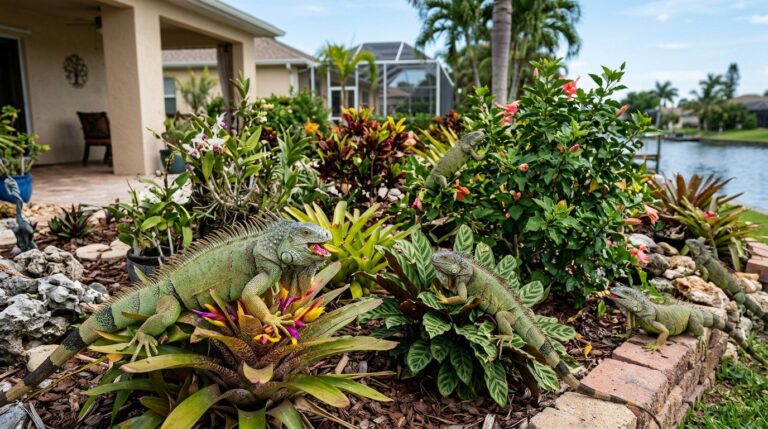

Indian Creek Village, also known as Billionaire bunker, is located in Miami-Dade County. Although this is a beautiful-gated community, it is facing a serious infestation of iguanas that are creating an array of problems. Being surrounded by water, Indian Creek Village gives easy access to unwanted invasive iguanas by climbing seawalls and docks. The golf course is being affected by iguanas because they eat a lot of plants and dig burrows. The economic impact from iguanas on Indian Creek Village has also raised concerns from government officials. Our goal is to help homeowners & government officials to eradicate the iguana infestation in this beautiful gated community.
Iguana Problems:
Green iguanas are a well known nuisance throughout South Florida due to their destructive habits. These reptiles are great climbers and have no issues climbing the borders of Iguana Creek village. Once they have made their way on to your luxury estate, they will begin to call this spot their new home. During the summer months they will feast on your tropical plants, poop on docks and in swimming pools and will also dig holes to lay their eggs. This can become very frustrating since you want your estate looking impeccable. Replacing plants becomes costly, especially if it’s a rare plant. It’s important to plant certain fauna that iguanas do not like to eat. Iguana feces is a major health risk for humans and pets, their feces can also stain expensive floors. After 90 days, iguana eggs will hatch and take over your property since female iguanas can lay up to 70 eggs in a year. But there is hope! By incorporating iguana removal, you can avoid these issues and damages.

Iguanas & Tropical Plant Damage:
Homes in Indian Creek Village have an array of Bougainvillea, orchids and fruit trees around homes which are favored by iguanas. Once these invasive reptiles locate a preferred plant that they like to eat, it will be left with no leaves or flowers. The damage to these plants can affect the overall health and growth of these plants. When choosing plants for new landscaping, it’s important to pick plants that iguanas do not eat to avoid having to replace them. There are a variety of plants that iguanas are not fond of and will stay away from them, which will help keep iguanas out of your property since they have nothing to feed on. If you already have plants or trees that iguanas are eating. There are deterrent methods such as clear tree wraps and deterrent sprays that will stop them from devouring your tropical oasis. It’s recommended to have iguanas removed to avoid costly plant replacements.
Iguana Burrows:
During the iguana breeding months, which are typically March through May. Iguanas will look for soft areas around your home to dig burrows and lay their eggs. You may not know if iguanas, raccoons or land crabs dug the holes, but iguana holes are very distinct. When iguanas dig holes to lay their eggs, they use their two front legs, which give the hole a half circle shape. You will also find a mound of dirt in front of the hole; this is a good way to know if the holes are from iguanas. Once iguanas locate a favorable place to dig, it will start digging long burrows underground to lay its eggs. These long burrows could reach 70’ in length with interconnecting tunnels. After the iguana burrow is complete, it will start to lay its eggs. Iguanas lay 20–70 eggs at a time. These occurrences may cause damage to docks, structures & seawalls due to the burrows eroding in time. Artificial turf can also be affected negatively by having iguanas around your home. When iguanas dig underneath artificial turf, it makes the turf have dips and uneven areas which can lead to bodily harm to humans and pets. Iguana control monitoring can help reduce the chances of iguanas digging burrows.

Humans & Pets May Face Health Related Issues:
Some people think iguanas are harmless, but they may not know the health risks of having iguanas at home. Iguanas regularly shed their skin as they grow. One method they use to help them shed is going into bodies of water. If you have a swimming pool, this might be their preferred location to help the shedding process. Humans and pets that have sensitive allergies might be impacted negatively by iguanas shedding around their property. Iguana feces is another problem for families and pets since their feces may have the bacteria called salmonella. We have found iguana poop in pools, boats, docks, roofs and playgrounds! This can be a real nuisance since you have to clean and sanitize these areas.. Iguanas can also carry ticks and mites, which can transmit diseases like Lyme disease and scabies.

Iguana Control & Removal:
Our iguana control methods are very effective for removing invasive iguanas. We use various techniques that are tailored to your home or business. Every situation is different which is why we have many options when it comes to removing iguanas. There are various advantages to both iguana trapping and nighttime iguana removal services. Our iguana burrow monitoring services will help avoid having future iguana infestations. We remove eggs from the burrows using our endoscopy camera to effectively locate them. Our team of experts are trained to inform and educate you throughout the entire process, so you can have peace of mind. Removing invading iguanas is important to keep your properties clean and to protect our native species, which are also affected by their presence.