
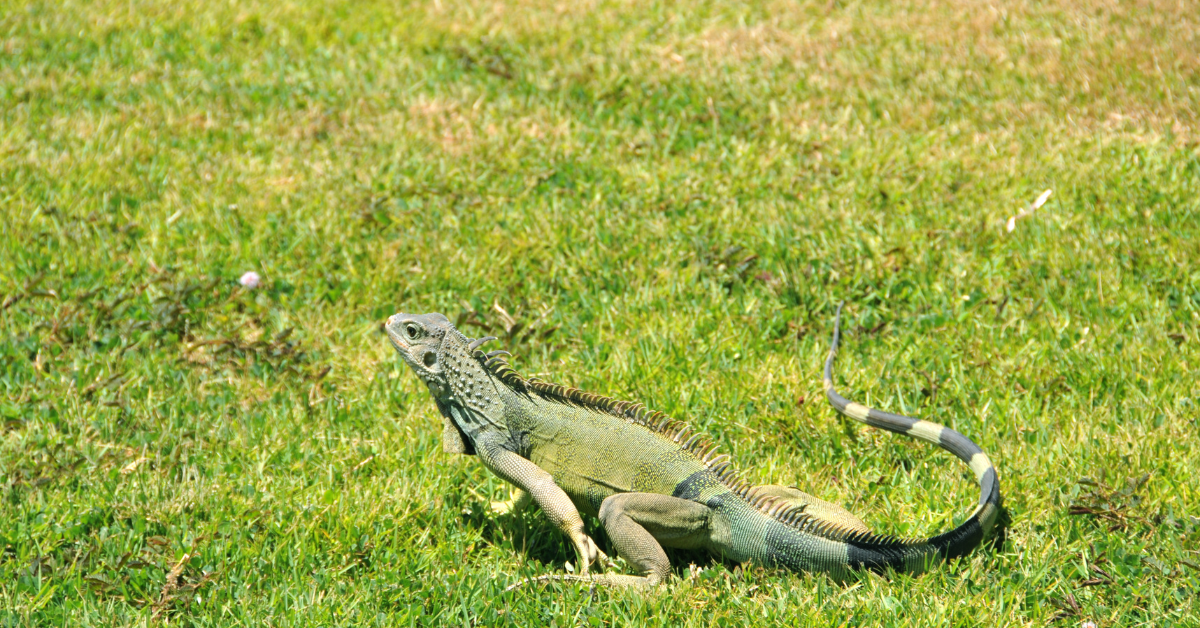
An iguana tail whip injury can be quite painful and an Iguana’s tail whip really causes damage? Iguanas use their tails for self-defense when they feel threatened or cornered. They stand tall and readily whip their tails in self-defense. Many homeowners are not aware of this behavior and are surprised by the pain when they get whipped. Pets and children are also at risk if iguanas are cornered, potentially leading to a trip to the ER or the vet, resulting in costly medical bills. When iguanas defecate, they drag their tails through the feces, which can pose health risks as iguana feces may carry salmonella. When you are tail whipped by an iguana and suffer a tail whip injury, it can break your skin and infect you from the fecal matter.
Iguana Tail Whip Injury Can Be Serious and Hurt:
If you have ever been tail whipped by an iguana, you know how much it can hurt. You can suffer from a tail whip injury because Iguanas are extremely agile and can whip their tails at speeds of up to 20 mph! We have encountered stories from homeowners who have been whipped when they attempted to corner an iguana, let’s just say they won’t try that again. Not wearing the proper clothing when removing iguanas can lead to injuries. It is recommended to wear pants, long-sleeved shirts, and gloves when removing iguanas. Like many reptiles, iguanas use this method of self-defense to deter predators from attacking them. We highly recommend hiring a professional iguana removal company if you encounter an iguana on your property.

Children and pets:
Being curious is a common trait for children and pets, but this can lead to potential injuries. Like most children, they find iguanas to be cool-looking miniature dinosaurs, until they are not! Iguanas are fascinating creatures with brilliant colors and can easily attract the attention of small children. The problem arises when children approach an iguana, which may lead the iguana to become defensive and use their tail-whipping self-defense strategy to scare off the child. This can cause personal tail whip injury, especially if the child is whipped in the eye. Pets are also vulnerable to these recent visitors on their territory. Time and time again, we hear stories of pets being hurt by iguanas. If a dog or cat can catch an iguana, they are at risk of being bitten and may suffer lacerations because of the iguana’s razor-sharp teeth. Iguanas have very sharp nails which they use for climbing, and these can also cause injury to pets and children.
Encountering An Iguana in My Home:
In South Florida, iguanas can easily find their way into homes or businesses because of open doors or windows, which is why they are considered to be pests. With beautiful weather typically all year round, many people enjoy letting the breeze flow through their homes or businesses. However, encountering an iguana inside your home can be a scary situation for some. We recommend that if you don’t have experience removing iguanas, do not approach it but monitor it until a professional animal control company arrives. Remember, if you corner an iguana in your home, it will feel threatened and may try to tail-whip you. If it’s inside a room or bathroom, the best option is to leave the door closed until the professional arrives. This will help keep the iguana from roaming your home, making it more difficult to locate. There have been instances where iguanas find their way into garages and die, as homeowners are often unaware the iguana was there in the first place. If this happens, it’s best to sanitize the area properly to avoid any potential health risks.

Health Risks:
As mentioned earlier, iguanas have a habit of dragging their tail through their feces as they move around, posing potential health risks for humans and pets. For instance, if an iguana tail-whips someone who has an open wound, there is a possibility of contracting salmonella poisoning, as iguana feces carry that bacteria. Being bitten by an iguana can also pose health risks, as some iguanas can carry rare bacteria called mycobacterium marinum. Iguanas are often found sunbathing around swimming pools to regulate their body temperatures or drink pool water, but they also defecate in or around the swimming area. Since pets are naturally curious, they can become ill if they come into contact with iguana feces. It is highly recommended to clean off areas where there have been iguana feces to avoid contamination to humans and pets.
What Should I Do If I Encounter An Iguana?
To avoid potential injuries from tail whips or the risk of infections, we strongly advise against approaching an iguana if you lack experience in handling them. Iguanas are extremely fast, making the chances of catching them very slim. Our team of iguana removal specialists is equipped with the right tools to safely remove iguanas from your property. Ensuring the safety of your home, family, and pets, it’s best to have iguanas removed to avoid costly repairs and visits to the ER or the vet.