
Bat Removal South Florida
Bat exclusion in South Florida is governed by strict FWC rules, including the April 16–August 14 maternity window. Wildlife Commander provides licensed removal for homes, HOAs, and commercial buildings.
Bat removal in South Florida is not a pest control problem. It is a regulated wildlife matter governed by state FWC rules, federal Endangered Species Act protections, and a fixed seasonal window that prohibits exclusion from April 16 through August 14 regardless of when you discover the colony. Most pest control operators won’t engage with it correctly. Many won’t engage with it at all.
That regulatory complexity is not an inconvenience. It is the reason the work requires a licensed wildlife operator who knows the difference between a Brazilian free-tailed bat colony and a Florida bonneted bat roost — and understands what each one means for your legal exposure, your timeline, and your remediation needs.
Bats in Florida Are Governed by Rules Most Operators Get Wrong
The Florida Fish and Wildlife Conservation Commission prohibits bat exclusion from any building roost between April 16 and August 14 each year. During those months, sealing bats out of a structure is illegal — state law, not a guideline. The federal Endangered Species Act adds a second layer for properties in Miami-Dade, Monroe, Broward, and Palm Beach counties, where the Florida bonneted bat has documented presence and formally designated critical habitat.
Operators who don’t know Florida’s bat regulations will quote you a job they can’t legally perform in the current season, proceed anyway, or advise you to wait without telling you what to do in the meantime. None of those outcomes serve you.
The correct approach: inspection and assessment now, exclusion scheduled from August 15. If you have a colony inside your structure today, calling Wildlife Commander gives you the full picture — species identification, entry point mapping, colony size estimate, guano assessment — and a dated work order for the first legal day of the exclusion window. August bookings fill. Properties without a plan in place wait weeks longer than they need to.
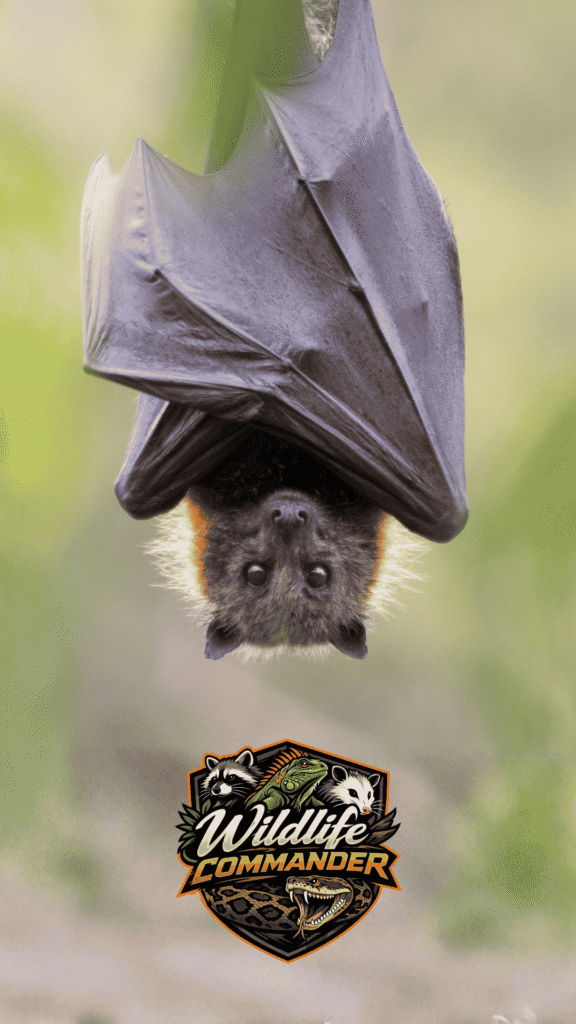
What Bat Activity Actually Looks Like Inside South Florida Buildings

Most property owners find the evidence before they find the bats.
The Brazilian free-tailed bat, the most common species roosting in South Florida structures, needs as little as three-eighths of an inch to enter a building. In Miami-Dade, Broward, Palm Beach, and Monroe County, where barrel tile roofing is the architectural standard, virtually every ridge cap, hip end, and tile interface is a potential entry point. The colony may have been present for a full season before any visible sign appears at interior level.
Signs of active bat roosting: dark grease staining around small exterior gaps at rooflines or eave edges; a persistent ammonia odour in attic spaces that intensifies during warm afternoons; accumulations of small, dark droppings resembling mouse pellets near exterior walls or just inside attic entry points; audible high-frequency chirping from ceiling or wall cavities around dusk. A single evening’s observation at dusk — watching the roofline for emerging bats — will confirm whether a colony is present and give a rough estimate of size.
The Brazilian free-tailed bat has a narrow tail that extends noticeably past the tail membrane, distinguishing it from the evening bat, the second most common species found in South Florida residential structures. Neither species should be handled or assessed by anyone without appropriate wildlife training. The Florida bonneted bat requires a separate identification step entirely.
A professional inspection maps active entry points, distinguishes them from incidental gaps, estimates colony size, and determines whether the roost is a standard colony or a maternity colony with pups present. That determination directly controls the work plan.
The Florida Bonneted Bat: What Federal Endangered Status Means for Your Property
The Florida bonneted bat (Eumops floridanus) has been federally listed as endangered under the Endangered Species Act since October 2013. In March 2024, the U.S. Fish and Wildlife Service formally designated 1.2 million acres across 13 South Florida counties as critical habitat for the species — including Miami-Dade, Monroe, Palm Beach, and Broward.
Florida’s largest bat, with a wingspan reaching up to 20 inches, it uses building structures as roost sites, particularly flat-roofed commercial buildings and older construction with accessible void spaces. It is genuinely uncommon in residential structures compared to the Brazilian free-tailed bat, but it is present in the southern end of the South Florida service footprint — particularly in the Keys corridor — and confirmed sightings in Miami-Dade and Broward have increased as urban habitat expands.
The distinction matters in practical terms. Federal take prohibitions under the Endangered Species Act apply to any action that harms, harasses, or kills a Florida bonneted bat. Any exclusion work on a structure with confirmed or suspected Florida bonneted bat presence requires species verification before devices are deployed. An operator who cannot distinguish the species, or who treats all bats as the same exclusion job, is operating beyond their competency and potentially in violation of federal law.
Wildlife Commander’s inspection protocol identifies species as part of the standard assessment. Suspected Florida bonneted bat activity changes the work plan before any devices are considered.
The Maternity Window: Why the Calendar Controls Everything
Between April 16 and August 14 each year, FWC prohibits exclusion of bats from any roost in Florida. The biological rationale is straightforward: female Brazilian free-tailed bats give birth in April and May; pups are non-flying until July or August. Sealing a roost entrance during the maternity period would trap flightless young inside with no exit — a mortality event for the colony and a violation of state law.
There is no permit pathway around this window for standard exclusion work. The restriction applies equally to residential properties, commercial buildings, and HOA common areas.
If you discover a colony between April 16 and August 14, the legal position is clear: exclusion cannot proceed until August 15. What can and should proceed immediately is inspection and planning. Wildlife Commander can complete the full assessment, identify and document all entry points, confirm species, estimate colony size, review guano accumulation, and place the property on the exclusion schedule for the first available date after August 15.
Outside the maternity window — August 15 through April 15 — exclusion can proceed without a permit. FWC requires that exclusion devices remain in place for a minimum of four nights and that the work be conducted when overnight temperatures are forecast above 50°F. South Florida’s climate satisfies the temperature condition year-round, meaning the operational window is effectively the full eight months outside the April–August restriction.
What a Legal Bat Exclusion Involves
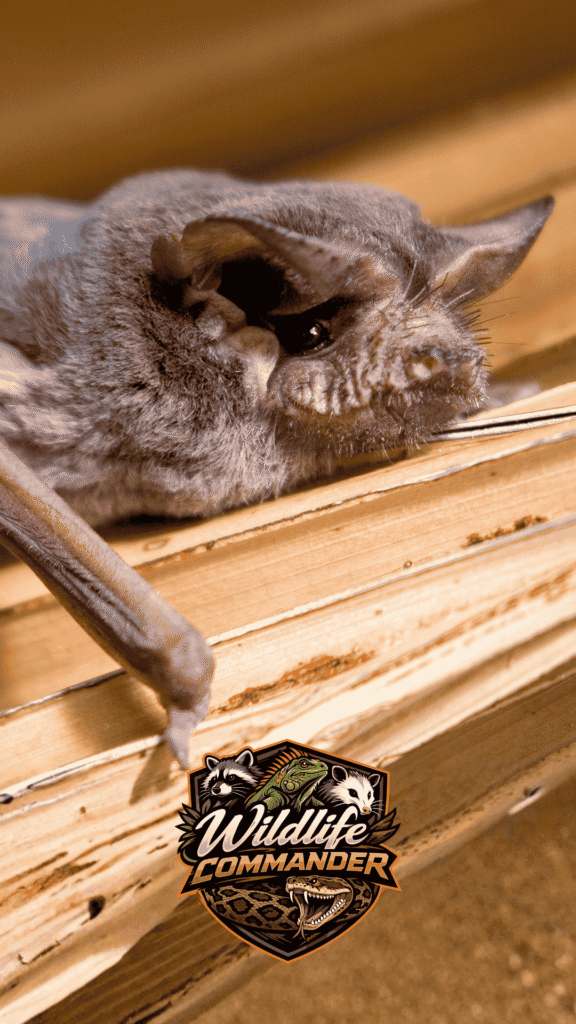
Bat exclusion is not extermination. Killing bats is illegal under Florida law regardless of season or circumstance. The only legal removal method is exclusion: one-way devices installed at active entry points that allow bats to exit but physically prevent re-entry. Once the colony has fully vacated — confirmed over multiple consecutive nights — all entry points are sealed permanently.
For barrel tile roofs, which cover a significant proportion of South Florida’s residential and HOA building stock, the sealing phase is more involved than for conventional construction. A Brazilian free-tailed bat exploits gaps at ridge lines, hip ends, valley intersections, and any point where tiles meet vertical surfaces. Identifying which specific gaps are actively used by the colony — versus the many incidental openings present in any tile roof — requires direct inspection rather than a blanket-seal approach.
Exclusion devices used in South Florida exclusions include caulked netting installed over primary exit gaps, polypropylene tube excluders at single-entry points, and foam-backed screen at soffit and fascia interfaces. The devices stay in place until the colony has fully transitioned out. The sealing phase then uses UV-resistant exterior caulking rated for Florida’s heat cycling, stainless steel mesh where long-term mechanical integrity matters, professional metal flashing at tile interfaces, and marine-grade foam for stucco and CMU wall penetrations. Materials chosen for coastal humidity and salt-air environments — the conditions throughout Monroe County and along the barrier islands of Broward and Palm Beach — hold significantly longer than standard construction sealants.
A full exclusion — from first device deployment to final seal inspection — typically takes one to two weeks for a standard residential colony, longer for larger commercial structures or multi-entry barrel tile roofs.
Guano Is the Problem That Outlasts the Colony
A bat colony that has occupied an attic or wall void for one or more seasons leaves behind a guano accumulation that does not become inert when the bats leave. The material presents an ongoing structural and health risk that is independent of the exclusion work.
Bat guano contains Histoplasma capsulatum, a fungal pathogen whose spores become airborne when the material is disturbed — by HVAC airflow, renovation activity, or any physical disruption. Histoplasmosis, the respiratory illness caused by inhaling H. capsulatum spores, ranges from a mild flu-like illness to chronic pulmonary disease. The risk is highest with mechanically disturbed large accumulations and in individuals with compromised immune systems, though it is not limited to that group.
FWC notes that histoplasmosis is more prevalent in the Mississippi and Ohio River valleys than in Florida, but the risk applies wherever significant guano accumulations occur — and South Florida’s year-round humidity accelerates fungal development in attic environments.
Professional guano remediation establishes negative-pressure containment to prevent spore migration into the living areas of the structure, uses wet removal methods to suppress aerosolisation, and removes compromised insulation where the material has been saturated. The affected area is treated with enzyme solution and, after drying, inspected before containment is removed. For attic spaces in South Florida where blown insulation is standard, a colony present for multiple seasons typically requires full insulation replacement in the affected zone.
Guano assessment is part of Wildlife Commander’s standard inspection. It is separate from exclusion work in scope and cost, and knowing the full picture before work begins is the only basis for an accurate project budget.
HOA Communities, Condos, and Marinas: Different Exposure, Same Rules
Bat colonies in South Florida’s HOA and condominium stock create a specific liability dynamic. The FWC exclusion window applies equally to common area structures — covered walkways, barrel tile community amenity buildings, attic spaces above shared party walls. HOA boards and property managers who authorise exclusion work during the maternity period carry the same legal exposure as individual homeowners.
In condo buildings, a colony discovered in one unit’s ceiling void often has its primary entry point in a different unit or in shared roof infrastructure. A meaningful inspection covers the building’s roofline, not just the affected unit. Flat-roof commercial buildings in the South Florida portfolio — including condo towers, marina offices, and hotel buildings — are particularly susceptible to Brazilian free-tailed bat entry at aging HVAC penetrations and parapet wall interfaces.
Marinas and waterfront commercial properties along the South Florida coast see seasonal bat activity that peaks through the summer months, as bats hunt over open water at dusk. Boat sheds, covered dock structures, and marina office buildings with older construction are common roost sites. The same maternity window restrictions apply, and the same species identification requirements hold — including the Florida bonneted bat consideration for waterfront properties in Monroe County and southern Miami-Dade.
Wildlife Commander works across residential, HOA, commercial, and waterfront accounts throughout the South Florida service footprint. For commercial and HOA clients, assessments are scoped to the full structure, not the first reported point of activity.
Frequently Asked Questions
Is it legal to remove bats from my home in South Florida?
Yes, through exclusion, and only outside the FWC maternity season window. The legal exclusion window runs August 15 through April 15. Between April 16 and August 14, exclusion from any roost is prohibited under Florida law. Killing or chemically repelling bats is illegal year-round.
I found bats in my building right now, during maternity season. What can I do?
You cannot legally exclude them until August 15. You can, and should, schedule a professional inspection immediately. Wildlife Commander will assess the colony, identify entry points, confirm species, review any guano accumulation, and place your property on the exclusion schedule. August and early September exclusion bookings are in demand — properties without a scheduled plan wait longer than necessary.
How do I know if I have a Florida bonneted bat rather than a Brazilian free-tailed bat?
Florida bonneted bats are substantially larger — wingspan up to 20 inches, compared to approximately 8 inches for Brazilian free-tails. They are also considerably rarer in residential structures. Visual species identification by a licensed wildlife operator is the reliable method. If a Florida bonneted bat is confirmed, federal Endangered Species Act protections apply and the work plan changes accordingly. Do not attempt DIY exclusion if you suspect a Florida bonneted bat roost.
Does guano need to be professionally removed after exclusion?
It depends on volume, location, and whether HVAC systems could aerosolise the material. Accumulations over approximately one inch deep carry histoplasmosis risk and should be handled with professional containment and respiratory protocols. Smaller amounts in sealed, low-activity spaces may not require active remediation. The assessment happens at inspection, giving you a complete picture before the exclusion work begins.
What does bat exclusion cost in South Florida?
Cost is driven by colony size, structure type, and whether guano remediation is in scope. Barrel tile roofs typically involve more sealing work than conventional construction due to the volume of potential entry points. Wildlife Commander provides inspection-based proposals covering the full project scope before work begins — there are no adjustments after the fact for entry points that were present at inspection but not addressed in the original quote.
Invasive Reptile Removal Across South Florida
Wildlife Commander provides invasive reptile identification, removal, and commercial monitoring services throughout:


Call (305) 200-9821 or submit a free estimate request to schedule an assessment. ¡Hablamos Español!