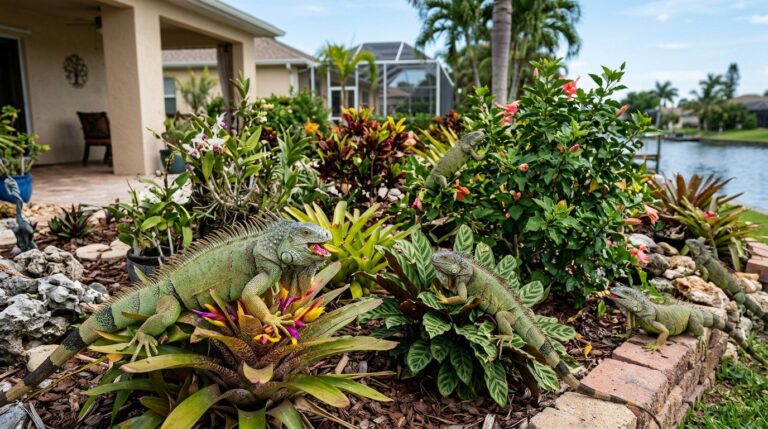
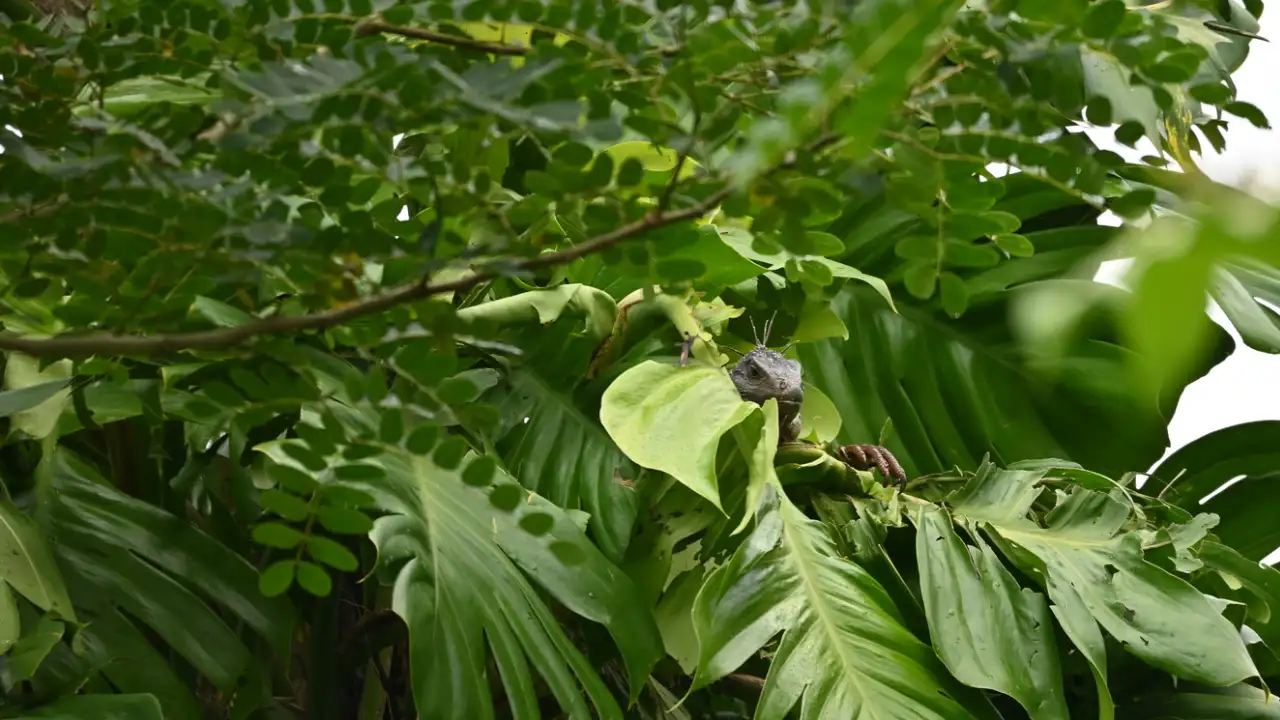
Ever wondered if iguanas are hanging around your property? Many of our clients are curious about identifying these signs of iguanas near their homes or businesses. Being aware of these indications is crucial to prevent infestations and address the issues timely. In this blog, we will discuss how to spot these indicators in a relatable and human manner. Noticing changes in the landscaping, like damaged plants or signs like burrows, feces, shed skin, and trails, can help to identify if iguanas are around. Understanding these signs is essential for effective management and seeking professional help if needed.
Damaged Landscaping Plants Are Signs Of Iguanas:
One of the most common signs of iguana presence is damaged landscaping plants. If you notice leaves missing or chewed, it could be a sign that iguanas have been snacking in your garden. Often, these large reptiles feed on a variety of vegetation, fruits, and tropical plants. Their voracious appetites can result in significant damage to your beloved plants. Addressing these signs and implementing iguana removal services at your property can save you money in the long run. Recognizing these indicators will also help you safeguard your garden and maintain its beauty for years to come.

Burrows Are One Of The Biggest Signs Of Iguanas:
Keep an eye out for iguana burrows around your property. Frequently we find sidewalks, sea walls,even driveways cracked or collapsed due to iguanas burrows. These problems can become very costly if not addressed beforehand. Iguanas are notorious for excavating burrows to deposit their eggs; these excavations are frequently found in proximity to sandy or loose soil terrain. Look for small holes that look like half a circle or tunnels in the ground, especially in sunny spots, as these could indicate potential iguana nesting areas. Additionally, monitoring for fresh dirt or disturbance around the burrow entrances can help in identifying active iguana nesting sites. By identifying these burrows, you can take the necessary measures to manage their presence and minimize potential damage to your property. Being proactive in addressing iguana burrows can protect your landscaping and prevent potential hazards to pets or children who may inadvertently encounter them in your yard.

Feces Around Your Home Or Business:
Discovering iguana feces around your property, such as near your pool, roof, or playground area, is a strong indicator of iguana activity. Iguana droppings are typically cylindrical in shape and can vary in color and shape depending on their diet. While these signs may be visually evident, it’s important to be aware of the health risks associated with iguana feces. Iguana droppings can potentially carry harmful bacteria and parasites, posing health hazards such as Salmonella infection if touched or accidentally ingested. Therefore, it’s crucial to quickly clean and sanitize areas where iguana feces are found, especially in areas where children or pets may come into contact with the waste. Seeking professional assistance for safe and effective cleanup and sanitation can mitigate the health risks and ensure a healthy environment for all residents. Additionally, implementing preventive measures to deter iguana activity, such as securing potential entry points and removing attractants, can help minimize the presence of these reptiles and reduce the associated health concerns.
Skin from Shedding Iguanas:
Signs of iguanas and their activity is finding their shed skin. Iguanas shed their skin regularly as they grow, and these skins can often be found in areas where they have been moving around. Keep an eye out for dried, scaled skin, as it could signify recent iguana activity nearby. Be especially attentive to areas where iguanas may seek shelter or bask in the sun, such as near rock formations, tree trunks, or other warm surfaces. Regularly checking for shed skins can provide valuable insight into the presence and movement of iguanas on your property.

Trails from Iguana Tails:
Given that iguana tails drag on sand or dirt when they move, they often leave distinctive trails behind them. If you notice these trails, it’s a good indication that iguanas have been moving through the area. Look for these markings in sandy areas or loose soil, as they are likely to be more visible there. Additionally, monitoring the presence of these trails among plants and outdoor structures can offer valuable insights into iguana habits and preferred pathways, aiding in the assessment of their activity and potential impact on your property. Regularly checking these trails can help in identifying high-traffic areas and potential nesting sites for effective management.
Early Detection:
It’s crucial to be aware of these signs because early detection can help prevent potential issues associated with iguana overpopulation. If you observe any of these signs around your property, it may be time to consider professional assistance to ensure the situation is effectively addressed. Early detection of these signs can save you money and prevent health scares, as well as minimize the impact on your property’s ecosystem, preserving its natural balance and safeguarding its integrity. Regular evaluations can help in promptly addressing any potential concerns and maintaining a harmonious environment.
At Humane Iguana Control, we understand the significance of being proactive in identifying and addressing signs of iguanas who have infested a home or business. Our team is readily available to assist you in evaluating and managing iguana-related concerns, providing humane and efficient solutions to safeguard your property and restore ecological balance. If you have seen any of the signs provided in our blog, please contact us to receive the appropriate course of action from one of our iguana removal programs. We are dedicated to offering comprehensive and effective measures for long-term iguana management.