When planning a day to play golf in South Florida, the last thing you would think about is an iguana interfering with your game. However, because of major iguana infestations, this has become a reality. Imagine hitting the perfect shot, only to have it stopped by an iguana sunbathing on the green! Another scenario is golf balls veering off course because of uneven terrain caused by iguanas burrowing. Many golf courses throughout Florida are facing these issues and have turned to iguana pest control companies to prevent infestations, damages, and hazards.
Iguana Interference On Golf Courses
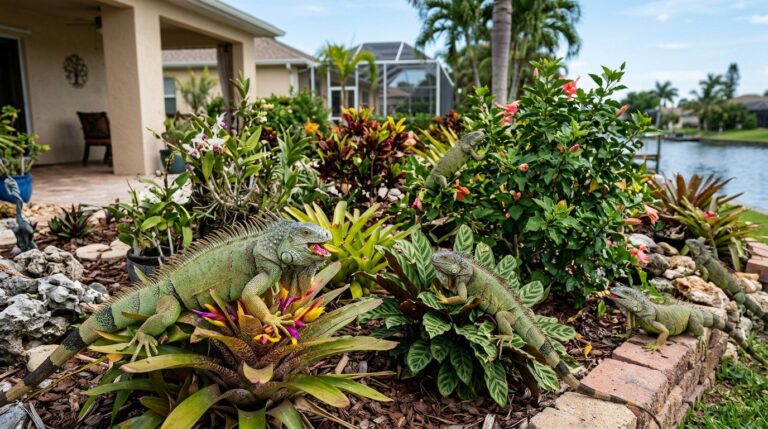
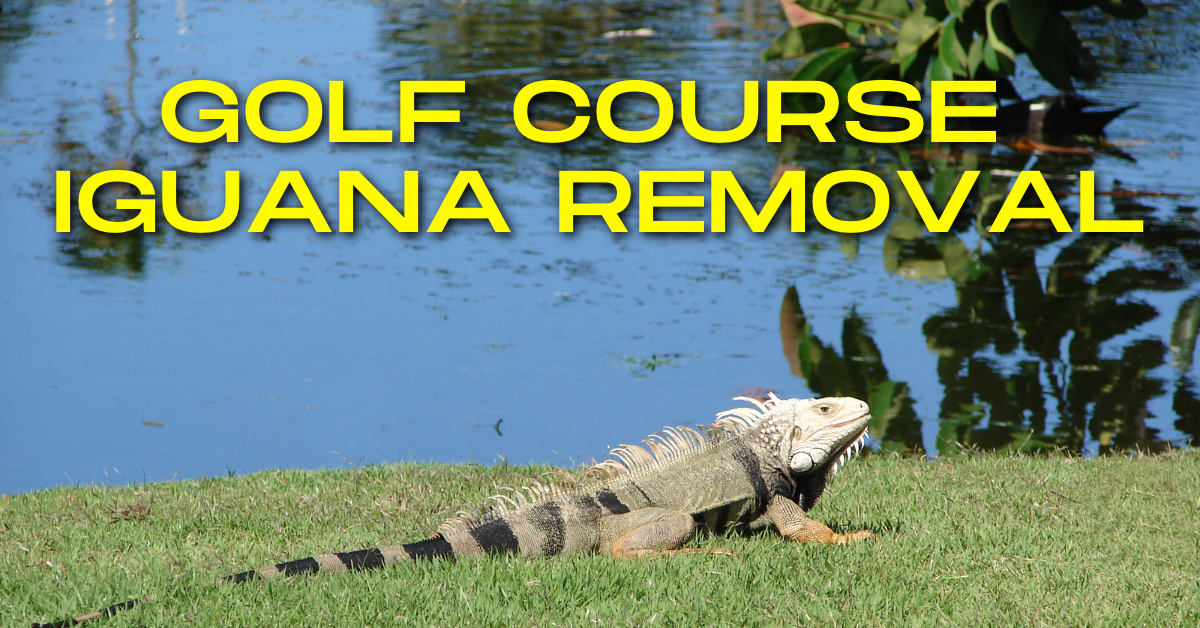
Green iguanas can be found on many golf courses in South Florida, but they are doing much more than eating grass and sunbathing. Many players face interference from iguanas running across various parts of the course or simply blocking shots. Iguana droppings are another problem for golfers, as they can affect the roll of golf balls during a putt. The maintenance crews for the golf course are constantly on edge, monitoring and cleaning up to avoid complaints from players. Burrows are another major downside for these pristine golf courses. Green iguanas can dig deep and long burrows, which can cause Bermuda grass to have indentations because of erosion. Have you seen iguanas mating on the green? We’ve witnessed it!

Costly Repairs For a Golf Course
Vegetation consumption by iguanas is another unfortunate situation many golf courses in South Florida face. Plants like crotons, bougainvillea, and peanut grass are just a few favorites for these scaly reptiles. Planting these plants can incur significant costs, so it’s best to avoid them. Avoiding certain plants can also help keep iguanas away, as they will not have a food source. Iguanas’ digging and eroding have negatively affected pond embankments. Filling these sites can be time-consuming and sometimes dangerous if crocodiles are present. Burrowing is the costliest issue related to iguanas. These reptiles will dig under golf cart paths, green putting areas, and bridges. Over time, iguanas can create deep, long interconnecting burrows to lay their eggs. With constant rain and irrigation, these burrows can collapse, leading to potential harm for players and workers. Iguana removal for golf courses is essential to avoid these costly repairs and hazards.
How Golf Courses Become Infested With Iguanas
Female iguanas reproduce once a year, but during that period they can lay up to 70 eggs. After 90-120 days, iguana hatchlings emerge from their burrows and begin their life cycle around golf courses and country clubs. While typically breeding once a year, some females may lay eggs during other seasons, likely due to South Florida’s favorable warm climate. Golf courses, with their sprawling acres, are ideal breeding grounds for these reptiles. The environment supports their thriving populations, offering easy access to food and water year-round.
One advantage golf courses have is the presence of native predators that prey on iguanas, helping control infestations. Preventing infestations is possible by removing iguana eggs from burrows. It’s recommended not to fill in these burrows without inspecting them for eggs, as baby iguanas will find alternate ways to dig themselves out.

Hazards & Liabilities
Even though iguanas are docile reptiles, there is always the possibility they can bite. Their teeth are razor sharp, designed to cut through foliage. While players might find it enjoyable to feed iguanas, the practice can become problematic. Hand-feeding iguanas can lead to serious injuries and infections. Feeding these reptiles can make them comfortable approaching people.
Iguana droppings pose health risks and can lead to infections. If droppings are found in areas where golfers play, players run the risk of illness if they are unaware that their golf ball has contacted them. Burrowing activity can lead to bodily harm. Uneven areas of the golf course, caused by burrows, can cause players to twist an ankle and fall. Golf courses could face potential liability, which is why iguana activity should be monitored and controlled.
Golf Country Clubs Impacted By Iguanas
Most golf courses have country clubs that feature swimming pools and outdoor dining areas. Iguanas affect these areas too. Swimming pools at these country clubs require constant cleaning and sanitization because of iguana droppings. When iguanas excrete in swimming pools, pool service companies often close them until they clean and sanitize them. Contamination is a considerable concern for members because of the risk of salmonella bacteria.
Lounge chairs, tables, and bars are regularly cleaned and sanitized by staff to ensure the safety of members. Staff find this constant cleaning annoying, and visitors may be scared off by the scaly invaders. Subsequently, this could lead to a loss of revenue and negative reviews for country clubs with golf courses. Avoid feeding iguanas around these clubs to prevent personal injuries.

Professional Iguana Removal For Golf Courses
To mitigate potential damages, health risks, and bodily harm, implementing an iguana removal plan is crucial for golf courses and country clubs. The golf courses we have assisted with iguana pest control services have seen significant improvements, preventing loss of revenue caused by damages. Humane Iguana Control has developed solid iguana control and prevention programs that create a worry-free environment.
These plans involve placing traps in areas not visible to players and offering nighttime iguana removal services. Night removal is preferred by both iguana removal companies and golfers because it ensures safety. Preventive measures, such as monitoring iguana burrows, are included to prevent new infestations from forming.
Our team of experts are trained and ready to assist golf courses & country clubs of any size. Contact us to learn more about our effective plans to eradicate iguanas from your golf course and country club!