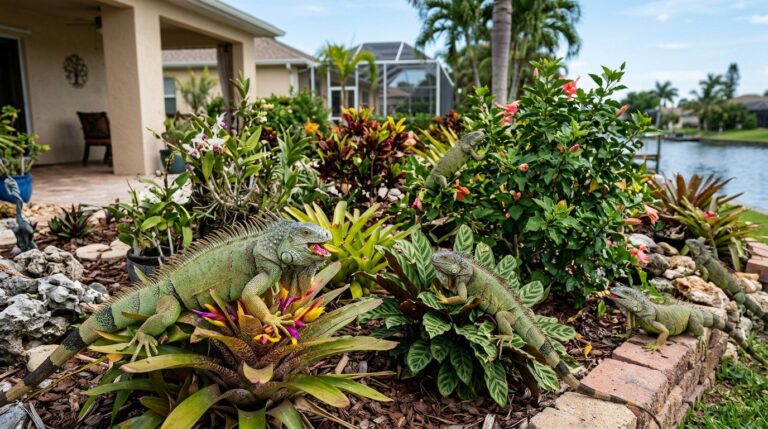
Planting beautiful plants in your home is very rewarding and can also be expensive, so you need to know how to deter iguanas. Here in Florida, most homes have their landscape laid out with lush, colorful tropical plants. Orchids are another beautiful plant that many people like to have in their garden. However, if iguanas are around, these plants might not survive. Iguanas are herbivores and have a voracious appetite for certain plants, flowers, and fruits. We have seen newly planted landscapes disappear within a week. We highly suggest having any iguanas removed from the premises prior to installing new plants. But with careful planning and choosing the right plants, you can enjoy your tropical oasis.
Iguanas Are Herbivores:
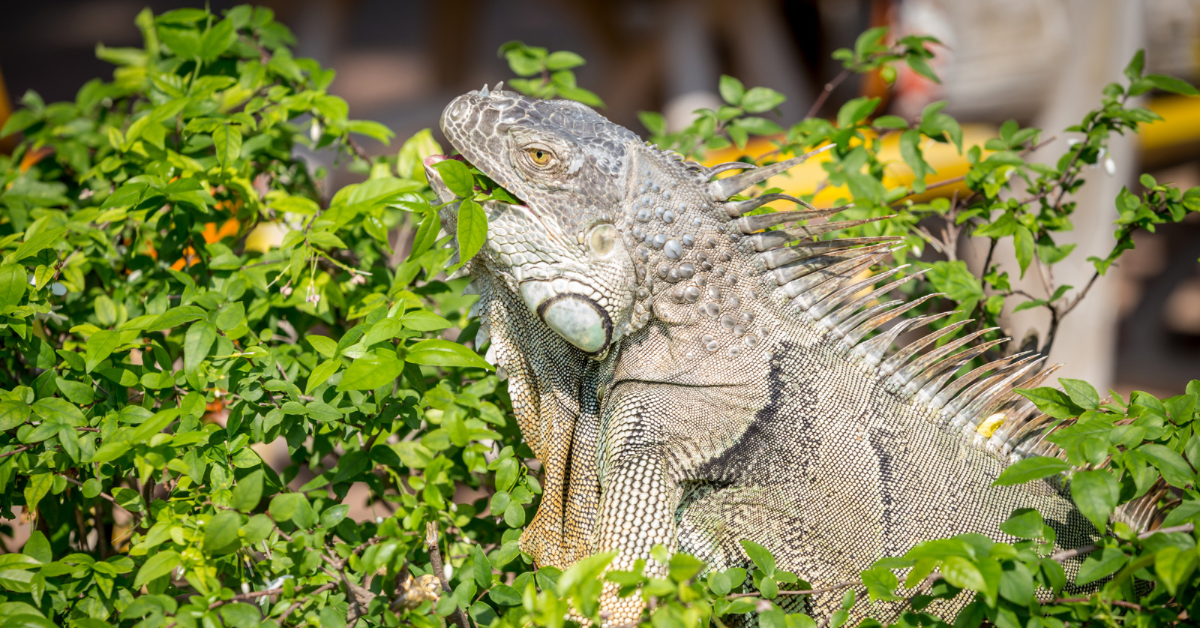
Originally, iguanas arrived in Florida in the 1960s and have since made Florida their home. The climate in our region is ideal for iguanas to thrive and successfully reproduce. Typically, iguanas like to feed on flowers, soft leaves, and fruits throughout your home. After finding a plant they like, iguanas will eat it completely every day. However, there are plants that iguanas cannot eat, which typically deter them from seeking other resources. Also, through careful planning, you can keep iguanas away from your newly planted flowers.

Plants That Deter Iguanas
Iguanas are visually attracted to colorful plants and certain fruits. They are particularly drawn to brightly colored flowers and foliage. When landscaping in areas with iguanas, it’s important to consider that they are attracted to colorful plants and might cause damage to gardens and landscaping. Here are some plants that iguanas do not eat which you can consider planting in your garden.
- Oleander
- Silver Buttonwood
- Ixora
- Lilyturf
- Chenille
- Codiaeum variegatum
- Cordyline
- Society Garlic
- Crown of thorns
- Citrus
- Spicy pepper plants
- Agave
- Seed pods from palms

Plants that Iguanas eat:
If you notice plants that appear unhealthy and look like they have been chomped on, you might have iguanas. It’s important to monitor plants that are being damaged, as there could be other critters or bugs that are causing the damage. Many people mistakenly attribute plant damage to iguanas when it’s actually caused by snails. Here is a list of plants that iguanas are attracted to that you should avoid planting in your garden.
- Hibiscus
- Bougainvillea
- Orchids
- Hong Kong orchid Tree
- Hibiscus
- Nasturtium
- Roses
- Alfalfa
- Dandelion
- Marigold
- Orchids
- Petunia
- Purple Queen
- Chrysanthemum
- Plums
- Prickly pear
- Sansevieria
- Inpatients
Deterring Iguanas From Plants:
Most times, you might already have or want some plants in your garden that iguanas eat. However, it is possible to plan accordingly to deter iguanas. To keep iguanas away, spray an organic mixture of oils, herbs, and some dish soap. Reapply it often because rain can wash it away. Installing a protective border wrapped with clear acetate will keep iguanas from climbing into the garden. To prevent animals from climbing onto trees and eating fruit, you can install clear acetate around the trees. Install fake owls with moving heads to deter iguanas, but remember to move them regularly to prevent iguanas from getting used to them. By implementing these pest strategies, you can enjoy your plants, vegetables, and fruits all year round.

Eliminating Iguana Presence From Your Garden
Our recommendation is to first assess for any iguana presence around your home before installing any new landscaping. Sometimes you might see only a few iguanas, but there are probably more because most iguanas have similar colors. Iguanas multiply quickly and can establish around your home or business if the conditions are ideal. It’s also important to search for iguana burrows around your garden to remove any newly laid eggs. Since iguanas can lay clutches of 20-70 eggs a year, it’s essential to get them removed before they hatch. Our team of experts will check the areas around your home to remove any iguanas, so you can enjoy your backyard without any worries.