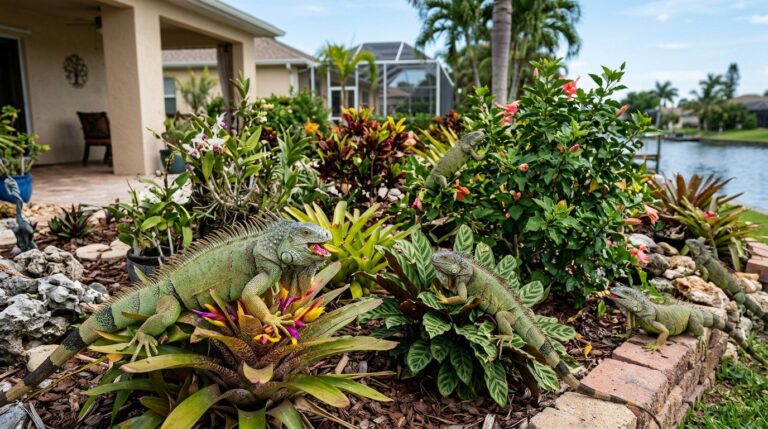
Like many parts of South Florida, Miramar is no exception to iguana pest infestations through the city’s urban communities. Damage to plants and constant defecation is a recurring issue and many residents throughout Miramar are fed up with these scaly invaders! The most concerning aspect is the damages caused by burrowing, these reptiles are able to dig under roads, sidewalks, driveways and are capable of digging under seawalls. Repairs for these damages can be very expensive, especially seawalls.
For these reasons, iguanas have become an undesired guest for the city of Miramar. In local parks, potential health risks have raised red flags due to constant defecation in common areas where activities are held . Imagine having a picnic with your family and all of the sudden you find a splatter of iguana droppings on your picnic set up! You can understand why iguanas are not a favored guest of the Miramar community. Native animals are also impacted by non native iguanas due to outcompeting them for food. They also consume native bird eggs. Burrowing native species are also impacted, iguanas have been documented entering burrows which displaces gopher tortoises and burrowing owls. This reduces the population of our endangered and threatened native species throughout the city of Miramar. Even though this has become a major problem there is still hope! When Iguana control efforts are put into play, it can resolve the ongoing infestations and stop health risks and damages caused by Iguanas!
How Iguanas Infest Your Property In Miramar
For years iguanas have begun to appear on Miramar properties that have never had iguana presence. This is due to constant iguana breeding during the breeding season which occurs during the months of May through August. Female iguanas will look for soft terrain to dig their burrows and lay their eggs. Once hatched, these 10 – 70 baby iguanas will dig themselves out and disperse to surrounding properties. On canal embankments too is a repeating issue, we consider these canals breeding grounds for iguanas. If breeding wasn’t enough, iguanas will swim through these canals and end up on your property. After they arrive on your property they will begin to establish themselves and will begin to look for food, water and shelter. So if you have certain plants such as orchids, crotons or bougainvillea you can be certain that iguanas will devour them due to their herbivores voracious appetite. If you live next to a golf course or local park that is infested with iguanas, eventually these scaly invaders will breed and disperse from these places and will invade your property causing an infestation. To properly control the iguana population, it is crucial to implement iguana removal services to the property impacted and the surrounding properties that have iguanas.

Iguana Poop Is A Constant Problem In Miramar
If you have iguanas around your home, business or school you will encounter iguana poop in common areas. As iguanas go about their day eating various plant species, they will constantly defecate as they navigate throughout the property. Identifying iguana droppings can be tricky especially if you have other wildlife in the area such as raccoons. Iguana poop is unique and can be easily identified once you examine its shape and texture. Droppings will usually be long and mushy, at times you will find it to be lumpy due to iguanas eating seeded plants such as seed pods from palm trees. One giveaway is that iguanas tend to defecate on the same spot daily rather than be in or around a swimming pool or from a tree. This occurrence is a constant problem for homeowners due to constant cleaning and sanitizing to avoid health risks. Iguana poop has the possibility to transmit a bacteria called salmonella which if accidentally ingested can cause health related issues. It’s important to wash your hand if accidentally touched and sanitize tools used to clean up the messy situation. Children and pets in our opinion are at most risk in our opinion especially these reptiles are defecating around areas where children and pets play. Damages to surfaces & personal property is also an issue due to the acidity in their droppings. When iguanas defecate on certain materials, it can stain the surface if it is not washed off immediately. By removing iguanas and monitoring their presence you can avoid these health risks and damages.
Keeping Iguanas Off Your Roof
As if keeping your roof clean wasn’t enough, now you have iguanas sunbathing on your roof which can cause issues and compromise the structure! Iguanas are cold blooded reptiles meaning they rely on heat sources to aid in their digestion and they also also rely on heat to help them regulate their body temperatures. Roofs are a great spot for them to achieve this, but while they are up there they will also leave a mess behind. Constant defecation will be a recurring issue and dry skin from iguanas shedding will also be constantly found. The problem with this is all the dry iguana poop and skin will eventually wash down the gutters and end up around your property, and could attract other pests. If you have cracked tiles on your roof, you may have just gained a new resident.
Iguanas will access these cracked tiles if the gap is big enough and use this spot for shelter. After green iguanas go about their day foraging for food and water, they will climb trees or bushes adjacent to your roof line to gain access to your roof when the sun begins to set. If predators are nearby, they will also dash to this location and hide until the threat is no longer present. Another problem with iguanas on your roof is that they can end up inside your attic. This happens when your roof has broken tile, rotten wood or missing facia boards. Having iguanas inside of your attic can bring loads of issues and health risks. These reptiles are capable of chewing on colorful wires in your attic which can cause electrical issues. When iguanas defecate inside of your attic it can damage and rot the sheet rock which can also lead to health issues due to mold and mildew build up. It’s very important to close any entry points and repair damages on your roof to keep iguanas out. Incorporating iguana trapping is the best method to remove iguanas off of your roof to avoid issues inside your attic.

Preventive Measures
Keeping iguanas off of your property and prevention of damages is crucial to avoid costly repairs and health risks. By implementing deterrent methods that can block off entry points you can achieve having an iguana free property. Below you can find strategies used by iguana control experts that have shown very positive results.
- Overgrown Brush: Iguanas can climb overgrown brush from surrounding properties. Cutting back any trees, bushes or brush can stop iguanas from climbing onto your property.
- Seal Entry Points: Many properties have fences that are damaged, it’s recommended to block or repair these fences to block iguanas from crawling through.
- Plants: When incorporating new plants to your property it’s crucial to install plants that do not attract iguanas, plants such as agave, bromeliads and society garlic are a smart choice for your garden. Once iguanas are unable to locate food sources, they will go elsewhere for food.
- Deterrents: Spraying deterrents around areas impacted can be beneficial but it must be sprayed continuously for it to be effective. When iguanas eat a plant that tastes bad due to the deterrent spray, it will avoid these plants. We use all natural oils and herbs so its eco friendly and safe around kids and pets.
- Iguana Tree Wrap: Utilizing clear tree wraps around trees, Tiki huts and dock pilings is a great way to keep iguanas away and off certain structures such as roofs, boats and docks. This wrap can also be installed on seawalls to stop iguanas from climbing onto your property. We use a clear wrap to not disturb the aesthetics of your home or business.

Iguana Trapping & Removal
Capturing iguanas using various methods is very effective if it is implemented properly. When we incorporate iguana trapping we make sure to study the areas impacted and where iguanas frequently travel through. For example, if iguana poop is common around a certain spot around your pool, we would place the trap there to successfully trap the iguana. When traps are not an option, we provide iguana removal using a pole snare. This technique is great for hard to reach places such as roofs and trees, our pole snare can extend to 20’ making it effective for these hard to reach areas. Other methods include grapplers and hand captures, these methods are typically used during our night time Iguana removal service. At night these scaly reptiles will climb onto bushes and trees to sleep, using our bright led flashlights, we can easily locate and remove the iguanas using hand removal & grapplers. At times iguanas will be on high hard to reach places such as tall palm trees or large oak trees, this is when we incorporate our pellet rifle method. Hiring a trained professional is crucial to humanely remove iguanas and to avoid property damages and bodily harm.