
A Deeper Dive into Unexpected Iguana Adventures
Welcome back to The Iguana Chronicles hosted by Michael Ronquillo. In this episode, listeners are taken behind the scenes to hear some of the wildest and most unforgettable stories from years of emergency iguana removals. These iguana encounters are extreme, to say the least. From iguanas inside toilets to surprise encounters in bedrooms, kitchens, and boats, Michael shares real-life experiences and offers essential advice on how to prevent these incidents from happening to you.
Weird Iguana encounters: Why Iguanas End Up Inside Homes and Properties
Natural Behavior and Urban Curiosity
Iguanas are naturally curious reptiles. In their daily search for food, water, and warmth, they may end up inside homes through open windows, doors, attics, or ventilation pipes.
Michael explains that many emergency calls happen because residents unknowingly leave small entry points open or unattended. From rooftop vents to torn window screens, iguanas are skilled at finding ways inside, often leading to surprising and sometimes terrifying encounters.
Emergency Iguana Call: The First Midnight Rescue

An Unexpected Visitor in a Child’s Bedroom
One of the first iguana encounters that Michael’s team handled happened late at night in Coral Gables. A young girl found an iguana trapped between her window and the screen in her bedroom. The sight of the reptile peering into the room sent her into a panic.
Upon arrival, the team assessed the situation, confirmed no other iguanas were present, and carefully removed the trapped animal by dismantling the window screen. This incident emphasized the importance of checking windows, screens, and small openings to prevent iguana entry.
Tip: Always repair damaged screens and keep windows closed when unattended to avoid unexpected reptilian guests.
Iguanas in Toilets: How It Happens and What to Do
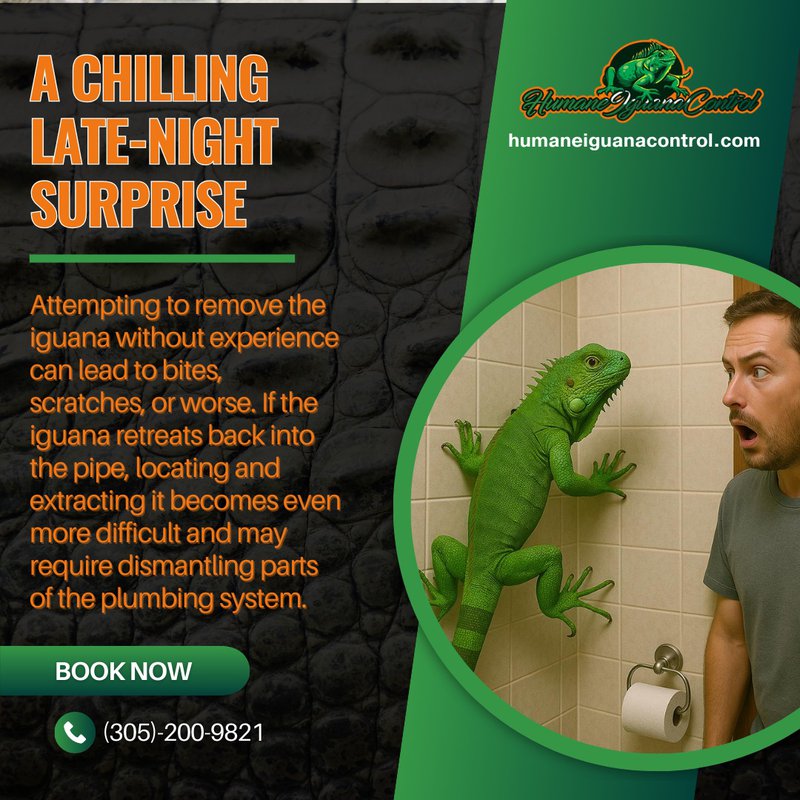
Chilling Iguana Encounters Late at Night
One of the most bizarre iguana encounters, yet common scenarios, involves iguanas ending up in toilets. Michael describes how iguanas climb onto rooftops, often using overgrown trees or bushes, and enter homes through uncovered ventilation stacks. These pipes connect to plumbing vents, offering an unexpected pathway into bathrooms.
Imagine opening your toilet lid at 2:00 a.m. and finding an iguana staring back at you. It has happened more often than you might think.
If you encounter an iguana in your toilet:
-
- Do not attempt to remove it yourself.
- Close the lid immediately to prevent escape.
- Speak with a professional with safe removal training.
Attempting to remove the iguana without experience can lead to bites, scratches, or worse. If the iguana retreats back into the pipe, locating and extracting it becomes even more difficult and may require dismantling parts of the plumbing system.
Iguanas Hiding in Bedrooms and Closets
The Master of Camouflage
In another incident, a resident reported an iguana loose inside a bedroom. Despite a thorough initial search, the animal remained hidden for over an hour. It was only after emptying the closet that the team located the iguana, perfectly camouflaged among dark clothing and materials.
Stress or environmental factors can cause iguanas to change color slightly, making them even harder to spot in cluttered spaces. This case highlights the importance of securing attic access points and roof holes, as even a small gap can allow an iguana to fall into living areas.
Quick Tip: Always inspect rooflines, attic accesses, and small gaps that might serve as hidden entry points.
Iguana Encounters In The Kitchen Vent: A Tricky Rescue Operation

When Dinner Plans Go Wild
Michael recounts a memorable case involving a kitchen ventilation system. An iguana had climbed into an exhaust fan vent, becoming trapped inside the ductwork above the stove.
Using an endoscopy camera, the team located the iguana wedged deep inside. After multiple attempts, they successfully extracted it through the roof by removing parts of the vent cap.
This story served as a crucial reminder:
-
- Unprotected exhaust pipes are potential entrances for curious iguanas.
- Installing chicken wire barriers over rooftop openings can help prevent this.
Contamination risks are also high if an iguana defecates inside ventilation systems, posing health hazards from bacteria like Salmonella.
Tiny Iguana in a Laundry Room
An Unexpected Guest Among the Clothes
In Coral Gables, a homeowner found a small spiny-tailed iguana inside her laundry room. The reptile had entered through an unsealed dryer exhaust vent. Hidden among detergent bottles, the tiny intruder was barely visible. Luckily, the team quickly removed it without needing to dismantle appliances.
This case stresses the importance of sealing outdoor exhaust vents with fine wire mesh to keep reptiles from sneaking inside.
Artificial Grass Surprise: Burrowing Beneath the Turf
The Case of the Moving Lawn
A particularly strange call involved artificial grass visibly “moving” on its own. Beneath the turf, an iguana had dug a tunnel seeking a nesting spot.
Michael’s team discovered two iguanas during the removal — one alive and one deceased — both trapped beneath the heat-retaining turf. Had the dead iguana not been found, rotting odors could have created a serious sanitation problem.
Tip: When installing artificial grass, ensure contractors create a compacted rock or cement border to prevent animals from burrowing underneath.
Iguana Encounters Inside Garages and Boats

Sneaky Entrances You Might Overlook
Leaving garage doors open invites iguanas to wander in, especially in cluttered spaces where hiding spots are plentiful. Michael shares a story where a massive iguana hid behind storage bins, creating a frantic situation when the resident tried to retrieve it.
Similarly, boats docked near canals are frequent targets for sunbathing iguanas. Michael recounts rescuing up to eight iguanas lounging on a boat’s deck after they climbed aboard using dock ropes.
Not only do these reptiles cause sanitation issues with their droppings, but their acidic waste can also stain boat paint and upholstery.
Swimming Pools: A Favorite Iguana Hangout
Health Hazards and Property Damage
Pools are natural attractants for iguanas seeking hydration and a place to cool off. Many calls involve iguanas getting trapped in skimmers or defecating in pool areas, creating serious contamination risks.
For hotels, associations, and private residences alike, pool contamination can lead to expensive cleanups and lost revenue.
Important: Never swim in a pool if you suspect contamination from iguanas. Always sanitize the water thoroughly after removal.
Iguanas Living in Attics and Inside Walls
Hidden Dangers Above Your Ceiling
Perhaps the most alarming situations involve iguanas nesting in attics. Michael describes how they damage roofing, chew through wiring, defecate in insulation, and create serious fire and health hazards. If feces accumulate, it can lead to mold growth and contamination of air ducts, threatening the indoor air quality of a home.
In some cases, iguanas fall into walls and cannot escape, leading to scratching noises or eventual decay if not promptly removed.
Proper inspection and sealing of all roof gaps and attic access points are critical steps to preventing these problems.
Final Thoughts: Prevention Is the Best Defense
Michael closes the episode with a strong reminder.

Many of these wild iguana encounters could have been prevented with simple precautions:
-
- Seal all vents and exhaust pipes with breathable mesh.
- Maintain roofs and window screens.
- Trim overgrown trees that provide rooftop access.
- Keep garage doors and exterior doors closed when not in use.
- Conduct regular inspections of your property for potential entry points.
Educating homeowners and businesses is key to staying ahead of the invasive iguana problem in South Florida.
Stay Tuned for More Adventures from the Iguana Chronicles
With each episode, The Iguana Chronicles shines a light on the real-world iguana encounters caused by invasive iguanas and provides practical solutions. Michael and his team continue to share their expertise to help South Florida residents protect their homes, health, and peace of mind.
Do not miss the next wild adventure.
Subscribe, rate, and leave a review. Together, we can make a difference!