
There’s something almost magical about Christmas in Florida. The warm sunshine, the tropical breeze, and the way Christmas lights gleam against palm trees create an almost magical atmosphere. However, every year, just before Christmas weekend, an unusual event occurs. It’s a strange phenomenon that people new to the state of Florida don’t always believe at first. When the temperature suddenly dips into the 40s or even the 30s, iguanas fall out of trees. Really. These cold-blooded reptiles become immobile, sometimes stunning themselves or freezing up just long enough to tumble onto sidewalks, patios, or even across a beach walkway.
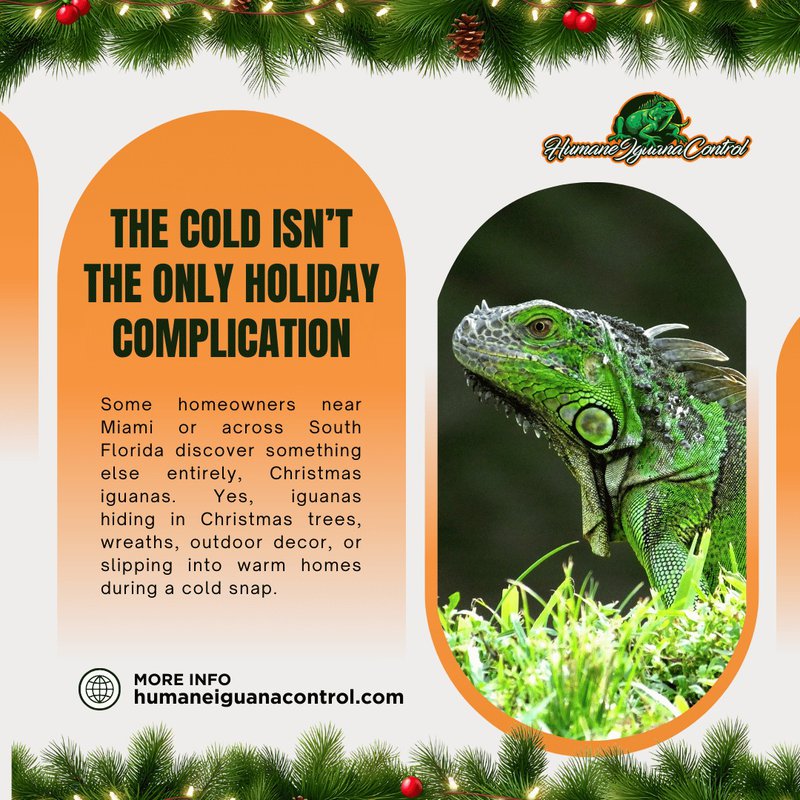
And as odd as that sounds, the cold isn’t the only holiday complication. Some homeowners near Miami or across South Florida discover something else entirely: Christmas iguanas. Yes, iguanas hiding in Christmas trees, wreaths, and outdoor décor or slipping into warm homes during a cold snap. At Humane Iguana Control, we’ve seen how quickly an iguana invasion can turn a festive living room into a confused, chaotic scene. And while it’s amusing to joke about iguanas invading homes on Christmas Eve, the truth is, this invasive species can cause genuine problems if they make themselves comfortable inside.
Why Iguanas Invade Homes During Christmas
Winter in Florida isn’t exactly winter. At least, it doesn't feel like winter the way meteorologists describe cold fronts in the north. But the thing is, even a small temperature drop hits iguanas hard. These reptiles are cold-blooded, meaning their body temperature depends entirely on the weather around them. When temperatures drop, they become immobile. If it becomes cold enough (especially during a cold Christmas weekend), they can literally fall out of trees. Some recover quickly, some don’t, and some wander off looking for warmth the moment they can move again.
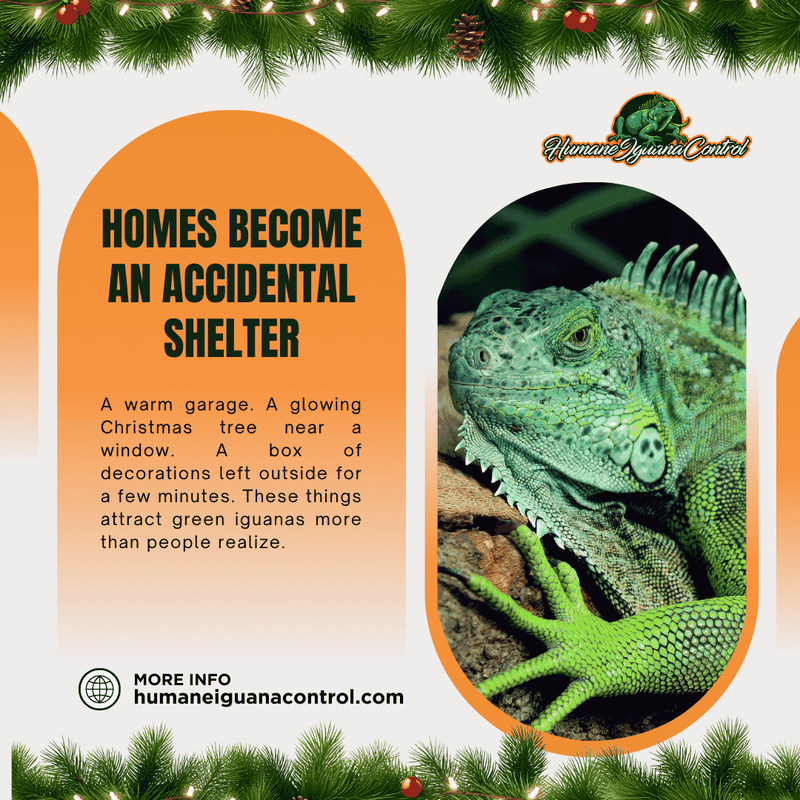
And that’s where homes become an accidental shelter. A warm garage. A glowing Christmas tree near a window. A box of decorations left outside for a few minutes. These things attract green iguanas more than people realize. It might sound odd, but warmth during a cold spell can be irresistible to an iguana trying to recover from a cold snap. The invasive iguanas that thrive across South Florida often slip into back patios, open doors, or even climb into the branches of a Christmas tree that was stored outside before being brought in.
The whole situation gets even stranger when you remember that iguanas are not native to Florida. So when they appear inside a house decorated for Christmas, everything feels slightly out of place. As if nature and holiday tradition collided in a way no one asked for.
How Christmas Trees Attract Iguanas
Christmas trees are beautiful, but they’re also basically a giant, cozy hiding place for any reptile looking for shelter. During cold weather, especially when temperatures drop quickly, iguanas search for anything dense, warm, or sheltered. A tree sitting outside before decorating can become the perfect temporary home. A homeowner near Miami or Key Biscayne might not notice a thing. After all, a green iguana blends easily with green branches. When the tree is moved indoors into warm air, the iguana either wakes up or recovers from the cold spell, resulting in a Christmas iguana invasion in your living room.
It doesn’t always happen immediately. Sometimes the reptile stays still until the temperature inside feels comfortable. Sometimes it shifts just enough to rustle a few needles, and people assume the tree is settling. The whole scenario feels almost unbelievable the first time someone experiences it. But if you’ve ever brought in a fresh tree after a cold front, you might understand how this species has adapted to our tropical-meets-seasonal climate.
Unfortunately, once inside, an iguana can do a surprising amount of damage; knocking down ornaments, scraping furniture, or chewing on plants. And while invasive lizards remain a nuisance, especially during strange phenomenon events like the “falling iguanas” forecast, they still need to be removed carefully, professionally, and humanely.
Signs an Iguana Is Hiding in Your Holiday Décor

People usually don’t realize an iguana is in their Christmas tree until something feels… off. Sometimes it’s a faint scratching early in the morning, almost too soft to notice. Occasionally it's a branch that seems to move without anyone touching it. Often, homeowners find droppings near the base of the tree or spot needles shaking as if a breeze passed through, even though the windows are closed.
When temperatures become cold enough that iguanas could fall out of trees outdoors, the stunned iguanas that recover might try to warm themselves inside wreaths, garlands, or even boxes of decorations stored in sheds or garages. And because these reptiles are cold-blooded, they hide wherever the temperature feels most stable. All it takes is a brief cold snap and a warm living room for iguanas to invade a home without anyone noticing at first.
It doesn’t matter if you’re near the beach, inland, or closer to Miami’s tropical neighborhoods; Christmas iguanas have become surprisingly common across South Florida, especially in areas where the iguana population has grown due to climate change and the steady expansion of invasive species.
Risks of a Christmas Iguana Invasion in Your Home
The first reaction most people have is surprise or shock. Some laugh about it later, but in the moment, an iguana inside a decorated tree is confusing, stressful, and honestly a bit chaotic. These reptiles aren’t aggressive by nature, but they are strong, swift, and unpredictable when startled. An iguana trying to escape might scratch floors or walls. It might leap toward a window or get tangled in lights. And because iguanas can carry bacteria in their droppings, the health concerns become real for families with kids or pets.
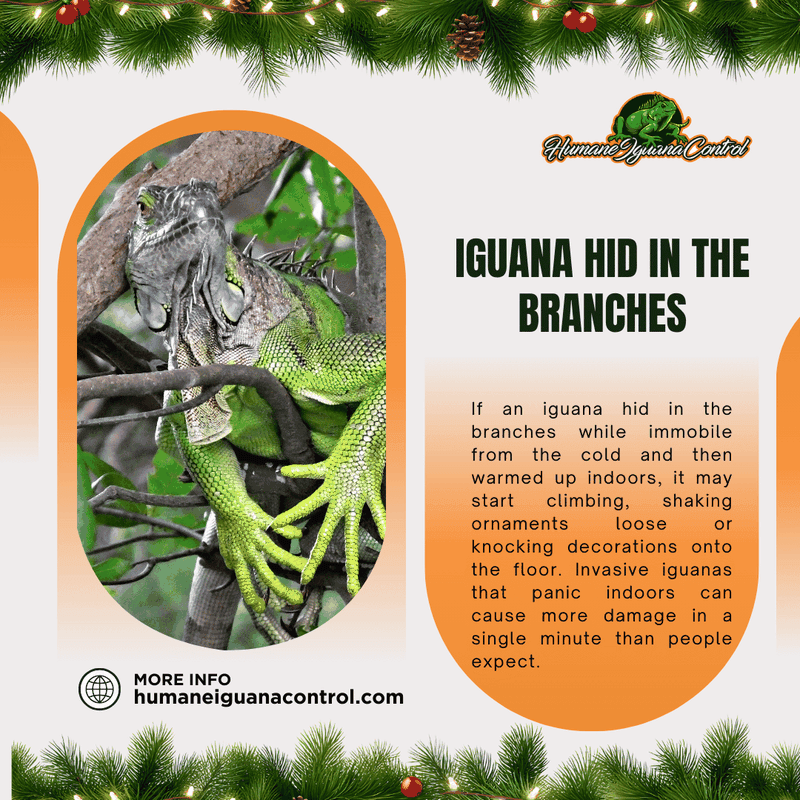
There’s also the matter of the tree itself. If an iguana hid in the branches while immobile from the cold and then warmed up indoors, it may start climbing, shaking ornaments loose or knocking decorations onto the floor. Invasive iguanas that panic indoors can cause more damage in a single minute than people expect. And because iguanas are not native to Florida, removing them safely (not just chasing them around) is the responsibility that falls on homeowners.
Trying to remove an iguana yourself rarely goes as planned. They run fast. They jump without warning. And if the reptile recovers from being stunned, its strength might surprise you. That’s exactly why homeowners across South Florida turn to professionals when they encounter Christmas iguanas.
How Humane Iguana Control Handles Holiday Iguana Problems
At Humane Iguana Control, we specialize in situations just like this: unexpected iguanas in places they shouldn’t be, including homes decorated for Christmas. Our work is rooted in experience, field knowledge, and science. We understand how cold-blooded reptiles react when temperatures drop, and we know how to locate and safely remove iguanas from Christmas trees, attics, rooflines, and warm indoor spaces.
We don’t rely on harsh chemicals or dangerous traps. Everything we do is humane, controlled, and based on understanding invasive reptiles and their behavior in Florida’s unusual climate patterns. Sometimes we inspect trees branch by branch. Sometimes we follow the signs of recent movement to find where the iguana settled after warming up inside the home. And we always take the time to explain what we’re doing so homeowners feel comfortable during the process.
And beyond removal, we offer guidance.
- On how to store decorations in a way that doesn’t attract reptiles.
- How to manage landscaping during cold spells.
- And how to prevent iguanas from slipping into garages or lanais during cold fronts.
We approach every case with patience because dealing with Christmas iguanas is more common than people expect, especially during a cold Christmas season.
Protecting Your Home From Iguanas This Christmas
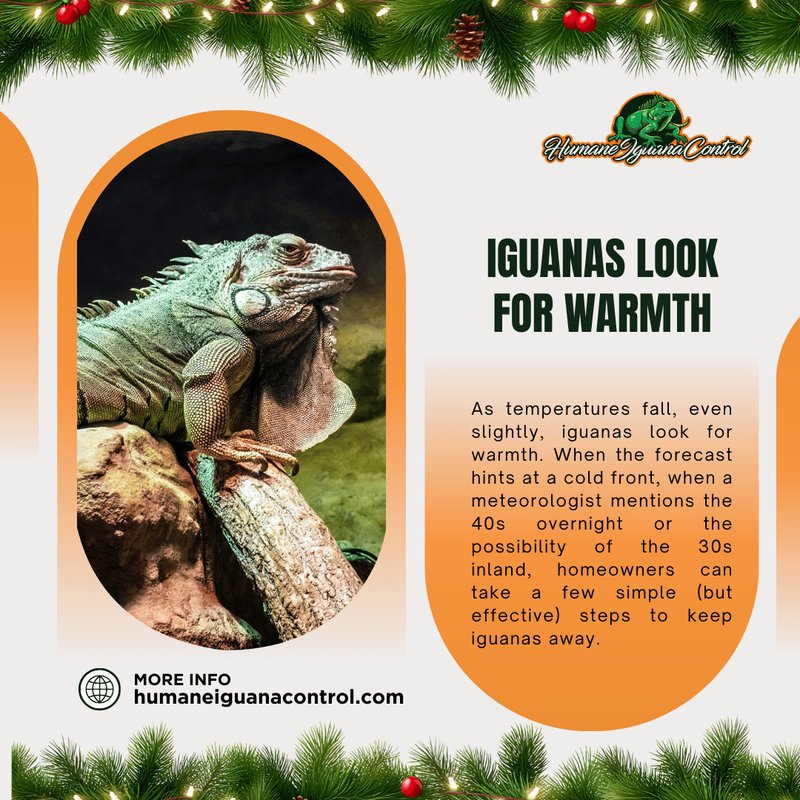
As temperatures fall, even slightly, iguanas look for warmth. When the forecast hints at a cold front, when a meteorologist mentions the 40s overnight or the possibility of the 30s inland, homeowners can take a few simple (but effective) steps to keep iguanas away. Checking outdoor Christmas trees or garlands before bringing them inside helps. Keeping garage doors closed during cold snaps helps too. And storing decorations in sealed containers rather than open boxes makes a surprising difference.
But prevention works best when paired with expert insight. That’s why many Florida residents, especially those near Miami or other regions with high invasive iguana activity, schedule pre-holiday inspections. It’s a way of staying ahead of a nuisance species that has adapted remarkably well to Florida’s tropical climate, even when it gets cold enough that iguanas fall out of trees.
With climate change affecting how often these cold spells happen, holiday iguana incidents may become more frequent. Being prepared makes the whole season feel a lot less chaotic.
Schedule a Christmas Iguana Inspection Today
If you’ve heard rustling in your Christmas tree, spotted movement in outdoor decorations, or simply want peace of mind before Christmas Eve, Humane Iguana Control is ready to help. We’ve handled cases across South Florida, from near Miami to neighborhoods that rarely see temperatures drop but still experience iguanas invading homes during unusual cold spells.
Our removal process is safe, efficient, and humane. The reptiles are still alive during cold snaps (they’re just stunned) and our job is to remove them without harm and prevent additional surprises during Christmas Day or beyond.
If you want a calmer holiday season and a reptile-free living room, we’re here. Mail us at humaneiguanacontrol@gmail.com or give us a call (305)-200-9821. One inspection can make all the difference.
if(window.strchfSettings === undefined) window.strchfSettings = {};window.strchfSettings.stats = {url: “https://iguana-removal.storychief.io/en/christmas-iguana-invasion?id=168119310&type=2”,title: “Your Christmas Iguana Invasion”,siteId: “313”,id: “c4ab2046-1583-4708-85f4-3825fc627417”};(function(d, s, id) {var js, sjs = d.getElementsByTagName(s)[0];if (d.getElementById(id)) {window.strchf.update(); return;}js = d.createElement(s); js.id = id;js.src = “https://d37oebn0w9ir6a.cloudfront.net/scripts/v0/strchf.js”;js.async = true;sjs.parentNode.insertBefore(js, sjs);}(document, ‘script’, ‘storychief-jssdk’))