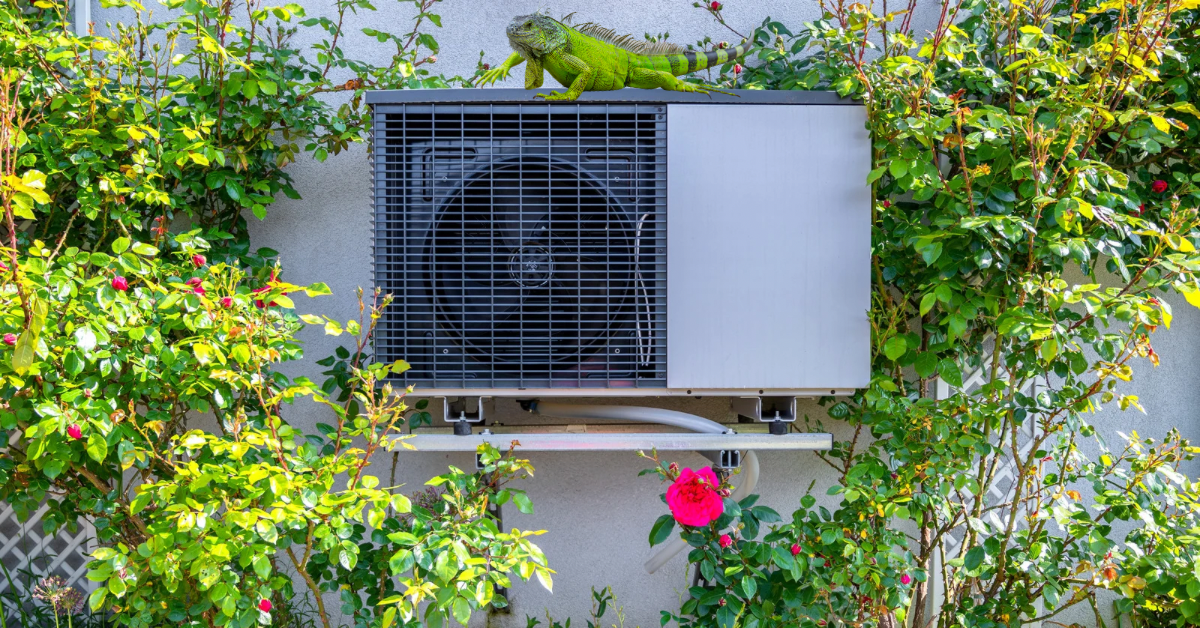
In South Florida, we have a scaly invader that is very curious: the green iguana! Other than iguanas ending up in toilets, fireplaces, and swimming pools, they can also find their way into your HVAC system. Although it’s not common, it’s definitely a possibility as we continue to remove iguanas from strange places. Problems associated with iguanas in HVAC systems are not to be taken lightly because of fire hazards, health risks, and potential damage to the system and equipment. This applies to all types of properties, including homes, schools, churches, and even resorts. Recently, we removed an iguana from a closet that contained an HVAC system. Luckily, it never had the chance to make it into the ventilation system or damage any electrical equipment, thanks to our 24-hour emergency iguana removal service. Prevention is possible, which is what we will discuss in this article.
How Iguanas End Up In HVAC Systems
While pinpointing the exact way iguanas end up in HVAC systems may be difficult, there are a couple of real-life events we have encountered that determined the exact entry point for how these sneaky reptiles ended up in these systems. New constructions are the places that are most likely to discover iguanas in HVAC systems. This is due to the new home or commercial building being without doors or windows for a long period of time. Iguanas can easily enter the duct system if the roof’s A/C unit remains uncovered or sealed during the installation process. Because iguanas are excellent climbers, they can access roofs from trees surrounding homes and buildings. This is how iguanas typically end up crawling through ventilation systems. By cutting back any overgrown brush or palm fronds, you can avoid having an iguana end up inside of your newly installed HVAC system.
HVAC Hazards Associated With Iguanas
While iguanas are docile reptiles, they still can cause damage because of their sharp nails. Iguanas can easily tear through the insulation that typically makes up ductwork. This can become frustrating for contractors as they may find it difficult to locate the source of lost A/C flow in attics. If iguanas find their way into electrical components and the cables are not properly insulated, they can tear through these wires, leading to electrocution and fire hazards. Removing iguanas from ductwork can also be a complicated task, as these reptiles rarely stay in one place. We use endoscopy cameras to locate them, which helps us avoid disassembling any HVAC systems. Our technician inserts an endoscopy camera through the vents to find where the iguana is, and once it’s located, we can effectively remove it.
Can Iguanas Fall Through Vents?
Iguanas falling through A/C vents is very possible because of their size. Iguanas can weigh up to 25 pounds, making it possible for them to break through A/C vents. HVAC contractors should be cautious of this if they encounter an iguana inside the system. Not only can iguanas break through vents if they are not secured properly, but these large reptiles can also cause bodily harm by falling on a human or pet. Many homeowners contact us after hearing scratching noises in their attics or A/C vents. Not knowing what type of animal or reptile it is, fear can kick in automatically. To properly identify what animal or reptile is in the attic or HVAC system, we insert our endoscopy camera throughout all the vents to identify the intruder. If an iguana does fall through a vent, we recommend not approaching it. Close any doors to keep it isolated until an iguana removal company arrives

Iguanas Defecating In HVAC Systems
It’s common to find iguana poop on outdoor HVAC systems due to overhanging tree branches or bushes. However, the accumulation of iguana droppings may lead to a faulty system. We recommend hosing down the iguana poop accumulation to prevent costly repairs. If iguanas end up inside your HVAC ventilation, there are health concerns to consider. The accumulation of iguana droppings inside the ducts can lead to health risks because of salmonella bacteria and mold. Iguana droppings contain liquids that can promote mold growth, and, as air circulates through the duct systems, it can also carry mold particles. If iguanas are defecating inside these ducts into vents, the droppings may seep onto surfaces below these vents. This can be very concerned for children and pets. After locating and removing iguanas, inspect all ducts for proper sanitization or replacement.
Keeping Iguanas Away From HVAC Systems
Keeping iguanas out of HVAC systems is possible by following preventive measures. The first step is to cut back trees and bushes, as mentioned earlier. Iguanas use overgrown limbs and bushes to access roofs for warmth. They need warmth to regulate their body temperature, which also aids in digestion. While they are on the roof, they may become curious and venture into HVAC systems if they are not sealed properly. Sealing these systems is essential to prevent iguanas and other rodents from entering. To protect outdoor systems, you can install a barrier around the unit that makes it difficult for iguanas to climb while still allowing for proper ventilation. If an iguana ends up inside your HVAC system, it’s highly recommended to contact an iguana removal specialist to locate and remove any iguanas that may be stuck inside the ductwork. To prevent encounters with iguanas altogether, consider implementing an iguana control service to remove any iguanas that may be living on your property.