
Miami-Dade County is well known for its tropical climate, attracting many visitors. The nightlife is a sight to see, with numerous attractions throughout the city. Local hot spots like Bayside, Brickell, and Wynwood are visited frequently by people from around the world. The county includes 34 incorporated cities, towns, and villages, as well as unincorporated communities and neighborhoods. Recently, the negative impact of iguanas has raised concerns among local government agencies. From structural damages to the loss of fauna throughout the county, it has brought along economical losses which cost taxpayers money. Also, many native species have also been affected by invasive iguanas.
How Iguanas Negatively Impact Miami Dade County:
Being an invasive species, iguanas have brought a negative impact to Miami-Dade County for a long time. Residents and businesses have suffered economically due to costly repairs and removals. Additionally, iguanas digging activities have caused damage to sea walls throughout Miami-Dade County. Native species have also been affected negatively, some of the species are the burrowing owl, Miami blue butterfly, Florida tree snail & the gopher tortoise. As herbivores, their consumption has led to the loss of vegetation, affecting local plant nurseries and agricultural farms. Not to mention, many hotels have been affected due to iguanas defecating inside of swimming pools. Also, the health risks associated with iguana feces have raised concerns in numerous local areas and tourist attractions where many people and pets are present.

Controlling the Invasion:
Many local waterways and parks in the area are heavily infested with three species of invasive iguanas: the Green Iguana, Black Spiny Tail Iguana, and the Mexican Spiny Tail Iguana. With few natural predators such as alligators, crocodiles, owls, and snakes, their ability to thrive and reproduce is high, particularly in residential areas where these predators are not present or places with high human activity. As a result, iguana control has become a necessity, akin to pool and lawn services. Local municipalities are hiring professional iguana removal companies to address the issue by removing iguanas from county parks and waterways, which can help reduce the iguana population.
Eliminating Iguana Breeding Nests:
Our climate is highly favorable for iguanas, making it ideal for their breeding habits. While iguanas commonly breed in the springtime, we have seen firsthand newly born iguanas hatching throughout the year. Female iguanas typically lay clutches of 20-70 eggs annually in burrows. These burrows can extend up to 70 feet in length with interconnecting tunnels, and if left unaddressed, they can cause structural damage due to erosion. The most effective method for eliminating iguana eggs is to locate the burrows and remove the eggs before they hatch. One method we use is an endoscopy camera, this avoids blind digging and disturbing the terrain. It is important to fill the holes with ballast rock to prevent iguanas from returning to their burrows to lay eggs after mating. Also by removing iguanas in general, It can reduce the infestation during mating seasons which equals less breeding.

Iguana Removal Throughout Miami Dade County:
Strategic planning of iguana removal methods is essential to achieve the best results. For instance, when addressing iguana infestations in a specific canal, it is most effective to begin removal at the start of the canal and continue until the other end of the canal. While patrolling canals, it is important to identify breeding areas and remove any eggs found in burrows. Varying the times of removal is also inportant. One method we provide is Nighttime iguana removal, this method has proven to be highly successful. As iguanas are diurnal, being active during the day and sleeping in trees at night, they are easier to locate with LED flashlights during nighttime and can be removed more effectively. This iguana control strategy method is also recommended for parks and coastal areas.
Detering Iguanas:
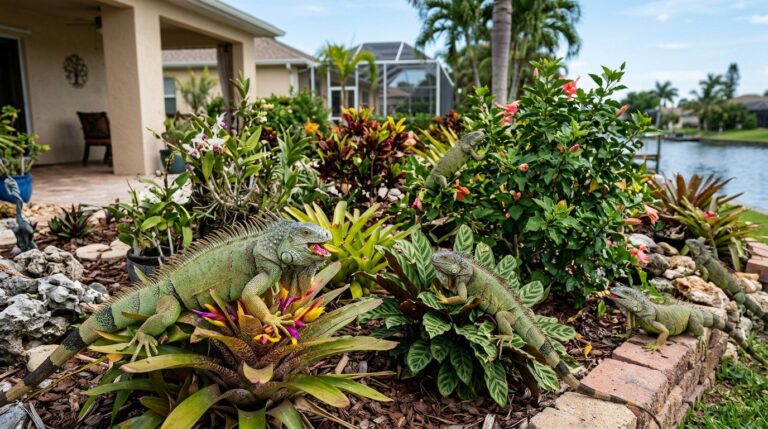
Deterring iguanas is crucial to keep them away from affected areas. When selecting plants for your home or business, it is important to choose varieties that iguanas do not typically eat. Plants such as orchids, hibiscus, and bougainvillea are known to attract iguanas, and they can thrive in these environments. If you already have these plants or want to install them, there are a few methods to deter iguanas from consuming them. One approach is to install a barrier wrapped with clear wrap, such as acetate film, which prevents iguanas from climbing and eating your flowering plants. This barrier also works effectively for fruit trees and palms located near your roof, as iguanas use trees as access points to climb onto rooftops for sunbathing. Additionally, sprays can be effective, but they must be applied regularly to work properly, as irrigation and rain can wash them off. Using organic natural oils and herbs that iguanas find unpleasant in taste or smell can serve as an alternative deterrent method.

Legal Iguana Removal Methods:
It is important to follow all local laws and regulations when providing iguana control services. In Florida, iguanas are classified as non-native invasive species, and relocating iguanas from one property to another is illegal. Doing so can result in fines. Legal methods of iguana removal typically include trapping, hand capture, pole snaring, and shooting with air PCP rifles. These methods should be conducted in compliance with the specific regulations and guidelines applicable to the region.
Trapping – This method requires specific planning to locate active areas of iguana presence. Once the areas have been identified, traps can be placed in those locations with fresh fruits and flowers to attract iguanas. It’s important to note that iguana traps must be checked at least once a day in accordance with the law. Additionally, these traps may inadvertently capture native species such as raccoons and possums, which should be released immediately. Utilizing traps of various sizes can be beneficial for achieving great results.
Hand Captures – Hand captures can be effective, but it requires quick action. Nighttime iguana removal is particularly successful for hand captures. As mentioned previously, iguanas typically sleep on trees and bushes at night. Smaller iguanas can be carefully hand-picked while they are sleeping on these bushes. We have successfully removed hundreds of smaller iguanas by hand during nighttime operations.
Pole Snare – In many properties, traps and shooting may not be an option due to various reasons. For instance, some properties are situated in close proximity to government buildings or schools, where such methods are not permitted. Additionally, homeowners or property managers may not allow these methods. In such cases, pole snares can be an effective alternative, particularly when dealing with iguanas on top of roofs. We use a 20’ telescoping pole with a swiveling snare at the end, which has proven to work very effectively. This approach eliminates the need to climb onto roofs or ledges, thereby reducing the potential for property damage or bodily harm.
Air Pellet Rifle – When using an air pellet rifle, it’s crucial to ensure that your scope is properly adjusted and spend ample time practicing to minimize any suffering experienced by the reptiles. Training is essential to prevent any unintended harm to bystanders. This method is legal and permitted, but it must be executed in a humane manner. Iguanas are often wary of their surroundings and may quickly flee at the slightest movement. In locations where this method is allowed, it has proven to be highly effective, especially for targeting iguanas perched in high places such as trees. Once captured, it’s important to humanely euthanize the iguanas and dispose of them appropriately.

To find out more about local laws regarding proper iguana removal methods, we recommend visiting The Florida Fish And Wildlife Conservation (FWC) and to stay informed about any new laws or regulations.