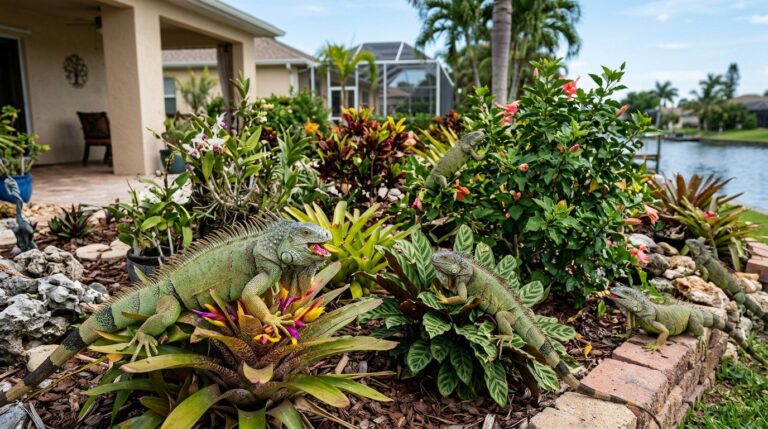
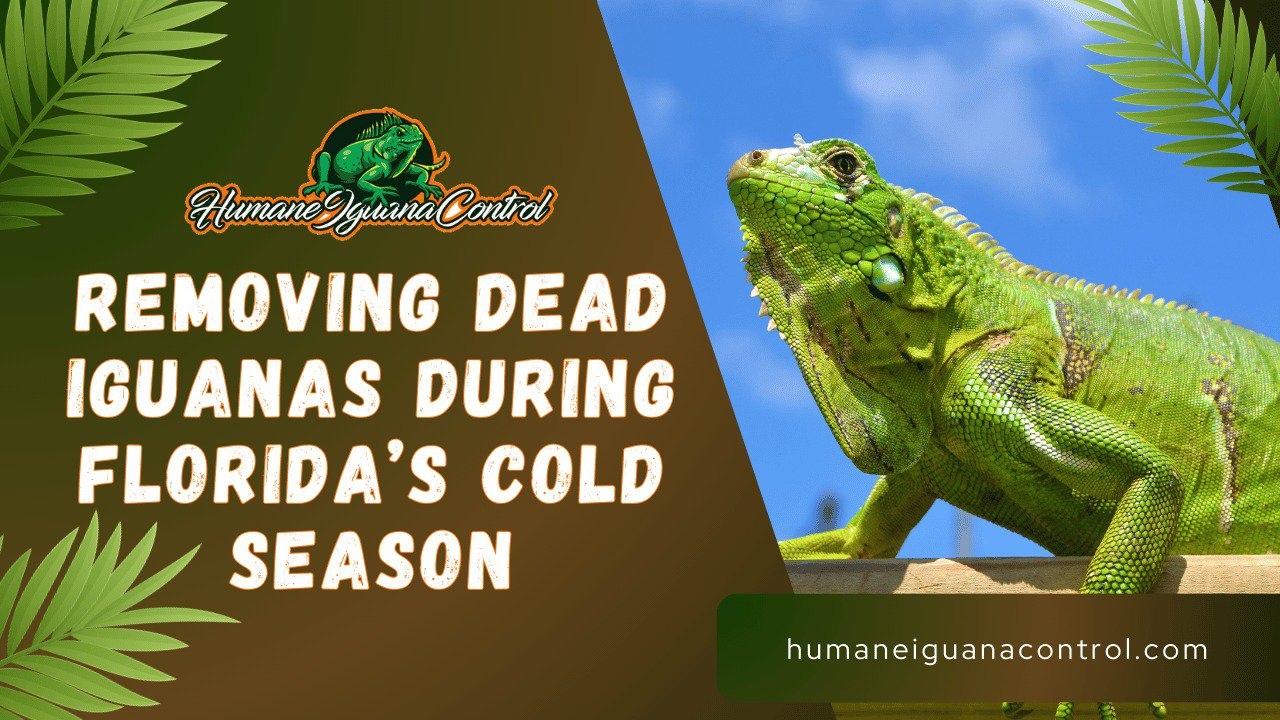
Every winter, Florida residents brace for something that still feels a little surreal, even after years of headlines. A cold snap rolls in. Overnight temperatures dip lower than expected. And suddenly, fallen iguanas start appearing across South Florida lawns, sidewalks, pools, and patios. Some are cold-stunned iguanas that may recover. Others are dead iguanas that never made it through the freezing temperatures. It’s a strange seasonal ritual that repeats itself across Florida, and for many homeowners, the question is the same every year: what do you do when a large reptile falls from trees onto your property?
At Humane Iguana Control, we respond to these calls constantly during a cold spell. Removing dead iguanas due to cold season in Florida isn’t just about cleanup. It’s about safety, sanitation, and handling invasive species responsibly. These moments highlight how fragile invasive green iguanas really are when the weather turns, and how important professional iguana removal becomes when the cold hits. However it is also important to note that dead iguanas can become a problem all throughout the year and thats why we continue remiving dead iguanas all year round.
Why Iguanas Can’t Handle the Cold
Iguanas are ectotherms. That means their internal body temperature depends entirely on their environment. Unlike mammals, they can’t regulate their own heat. When temperatures in Florida fall quickly during a cold snap, especially overnight, green iguanas enter a state called torpor. Their bodies slow down. Muscles stop responding. They become immobile, stunned, and sometimes appear lifeless. Wildlife officials often describe this as cold stunning.
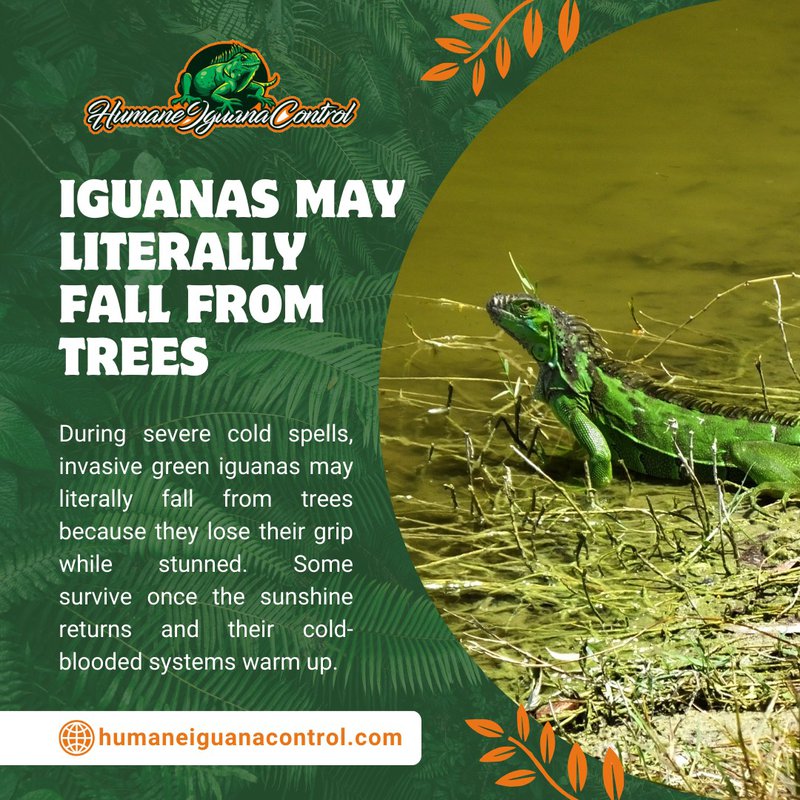
During severe cold spells, invasive green iguanas may literally fall from trees because they lose their grip while stunned. Some survive once the sunshine returns and their cold-blooded systems warm up. Others do not. When freezing temperatures linger too long, the reptile cannot recover. That’s when cold-stunned as well as dead iguanas begin appearing across South Florida neighborhoods.
This phenomenon isn’t new, but it’s becoming more visible. Florida’s environment and economy are increasingly shaped by invasive reptiles, and invasive species like the green iguana struggle when the climate swings to extremes. Even record-breaking cold events in south and central Florida expose how poorly adapted these lizards are to sudden drops in temperature.
The Widespread Impact Across Florida Communities
From Fort Myers to Palm Beach, from Miami to inland communities, fallen iguanas appear almost everywhere after a cold snap. Homeowners wake up to find a large lizard near their driveway. Businesses find cold stunned iguanas near entrances. Pools, docks, and patios become unexpected drop-off zones for reptiles that simply could not hold on any longer.
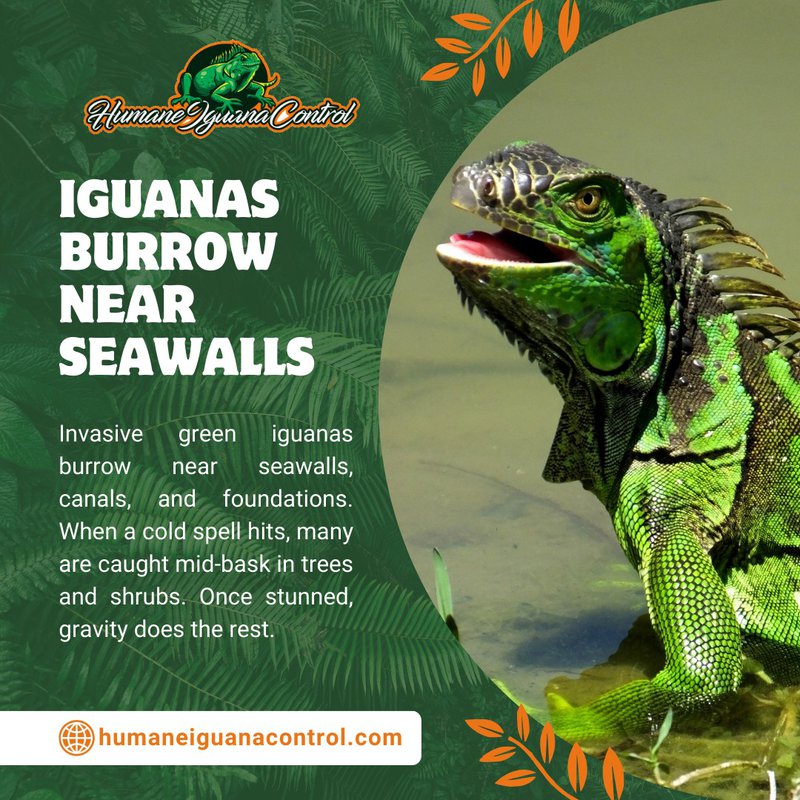
The issue spreads across South Florida especially fast because the iguana population is dense in urban and coastal areas. Invasive green iguanas burrow near seawalls, canals, and foundations. When a cold spell hits, many are caught mid-bask in trees and shrubs. Once stunned, gravity does the rest.
Florida Fish and Wildlife Conservation Commission reports show that cold stunning events bring spikes in public calls. People don’t know whether the reptile is alive, suffering, or already gone. Some try to help. Others panic. Wildlife officials regularly remind residents not to handle the animals without training. Even stunned reptiles can lash out when they regain partial movement.
That’s where professional iguana removal companies step in. And during winter, calls increase dramatically.
The Problem With Leaving Dead Iguanas in Place
It’s tempting to ignore a fallen iguana and hope nature handles it. But dead iguanas quickly create sanitation problems. Decomposition begins faster than many expect, especially when sunshine returns after a cold morning. Odor builds. Insects gather. Bacteria spreads across surfaces where children or pets might play.
There’s also the emotional side of it. Many homeowners are unsettled by the sight of a large reptile on their property. Even though invasive reptiles are a nuisance species, they still deserve to be handled humanely and respectfully. Improper disposal can violate local guidelines and contribute to public health concerns.
Florida Fish and Wildlife encourages residents to report or properly manage invasive reptiles. The Fish and Wildlife Conservation Commission has even established collection sites and drop-off sites during major cold stunning events. Residents may collect and turn in cold-stunned iguanas from their properties, but this process requires knowledge and safe handling techniques.
For most people, calling trained professionals is the safer option.
How Humane Iguana Control Removes Dead Iguanas
At Humane Iguana Control, we specialize in responding quickly during cold snaps. Our team understands reptile physiology, cold stunning, and the safest way to approach fallen iguanas. Whether the animal is stunned or deceased, we treat every case with care and professionalism.
Our removal process is sanitary and discreet. We inspect the area, confirm the reptile’s condition, and remove it using protective equipment designed for wildlife handling. If a reptile is still alive but unable to recover, licensed professionals may humanely euthanize according to wildlife standards. Florida Fish and Wildlife allows property owners to humanely kill green iguanas year-round on their property, but doing so without training is dangerous and emotionally difficult for most residents. That’s why trained trappers exist.

We also educate homeowners about prevention. Burrow management, landscape adjustments, and early intervention reduce future encounters. Iguanas year-round on their property can turn into a bigger infestation problem if ignored.
Our goal isn’t just removal. It’s restoring peace of mind after a cold event leaves homeowners dealing with something unexpected.
Why Professional Removal Matters During Cold Snaps
Cold stunned iguanas can look dead but suddenly move once warmed. That unpredictability is why wildlife officials advise against direct handling. Even a stunned lizard can bite or whip its tail with surprising force. Protective equipment, training, and knowledge of reptile behavior matter more than people realize.
Professional control companies follow established guidelines from the conservation commission and wildlife authorities. We understand when an animal may recover, when intervention is needed, and how to transport or dispose of remains responsibly. We also coordinate with drop-off collection sites when appropriate, ensuring compliance with statewide invasive species management.
Handling invasive reptiles isn’t just a cleanup task. It’s part of a larger environmental effort to manage species that disrupt native ecosystems. Every removal contributes to controlling population growth and protecting Florida’s environment and economy from long-term damage.
Preparing for the Next Cold Spell
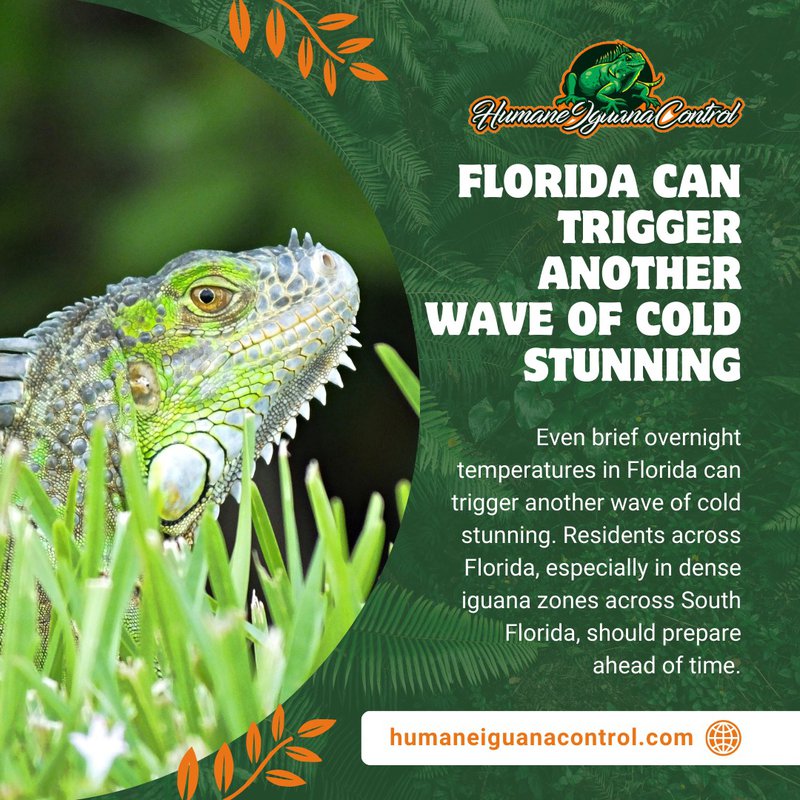
Meteorologists warn that unusual cold snaps may become more frequent. Even brief overnight temperatures in Florida can trigger another wave of cold stunning. Residents across Florida, especially in dense iguana zones across South Florida, should prepare ahead of time.
Checking trees, fences, and shrubbery after a cold night helps spot fallen iguanas early. Keeping pets away from stunned reptiles prevents injuries. And knowing which iguana removal companies to call before the next cold spell saves time during an emergency.
Humane Iguana Control offers pre-season inspections and rapid-response removal during winter events. We monitor weather patterns closely. When forecasts predict freezing temperatures, our teams prepare for increased calls so homeowners aren’t left guessing what to do.
Call Humane Iguana Control When You Need Help
Finding dead iguanas due to cold season in Florida is unsettling, but you don’t have to handle it alone. From Miami to Fort Myers, from Palm Beach to neighborhoods across south and central Florida, Humane Iguana Control provides fast, humane, professional removal services.
We handle fallen iguanas safely. We follow wildlife standards. And we help residents navigate one of Florida’s strangest winter phenomena with calm, respectful expertise.
If a cold snap leaves an unexpected reptile in your yard, call us. We’ll take care of it the right way.
if(window.strchfSettings === undefined) window.strchfSettings = {};window.strchfSettings.stats = {url: “https://iguana-removal.storychief.io/en/removing-dead-iguanas-during-floridas-cold-season?id=160796761&type=2”,title: “Removing Dead Iguanas During Florida’s Cold Season”,siteId: “313”,id: “c4ab2046-1583-4708-85f4-3825fc627417”};(function(d, s, id) {var js, sjs = d.getElementsByTagName(s)[0];if (d.getElementById(id)) {window.strchf.update(); return;}js = d.createElement(s); js.id = id;js.src = “https://d37oebn0w9ir6a.cloudfront.net/scripts/v0/strchf.js”;js.async = true;sjs.parentNode.insertBefore(js, sjs);}(document, ‘script’, ‘storychief-jssdk’))