
Invasive Reptile Removal in South Florida
Licensed removal of Argentine tegus, Burmese pythons, and monitor lizards across Miami-Dade, Broward, Palm Beach, and Monroe Counties. FWC-compliant. Residential and commercial.
South Florida’s invasive reptile problem is not a single story. It is three distinct species management challenges — each with its own biology, regulatory framework, and risk profile — all accelerating at the same time.
Argentine tegus have moved out of the agricultural buffer zones where they first established and are now a regular presence in suburban residential neighborhoods across Miami-Dade and Broward. Burmese pythons have been an Everglades story for over a decade; they are increasingly a story about the western edge of residential Miami-Dade. Nile monitors — large, aggressive, and water-dependent — are establishing along canal networks and retention pond systems throughout South Florida’s residential corridors.
What unifies all three is their legal status under the Florida Fish and Wildlife Conservation Commission. Every species on this page is a Prohibited Nonnative Species under FWC rules. That classification has a specific practical meaning: these animals cannot be legally relocated. They cannot be taken from one property and released on another. For licensed operators, the only legally compliant outcome is capture and humane euthanasia.
That is not a conversation most property owners are prepared for. Wildlife Commander explains the process clearly before any work begins.
Tegus Are Not Passing Through - They Are Establishing
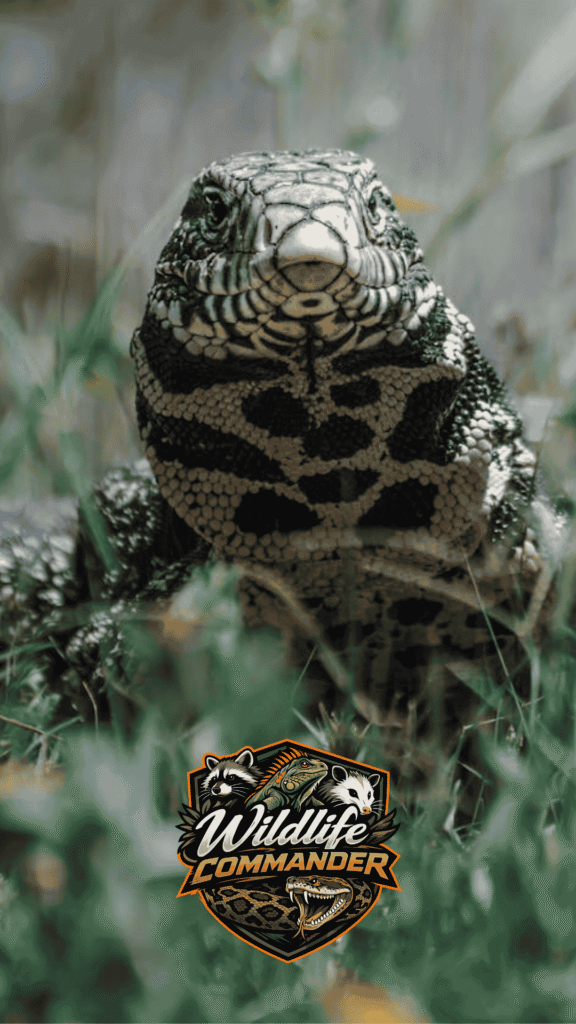
The Argentine black and white tegu (Salvator merianae) is the most widespread invasive reptile concern in South Florida’s suburban residential market. Adults reach four feet or more in length, are highly mobile across a wide temperature range, and are omnivorous in a way that creates specific damage patterns in residential and agricultural settings.
Tegus dig. They burrow into lawn areas, planting beds, vegetable gardens, compost areas, and — critically — the berms of retention ponds that define South Florida’s HOA and commercial landscape. The digging is not incidental; it is how tegus locate food (eggs, small animals, invertebrates) and create overwintering refuges. A pair of tegus that has selected a property as territory will excavate multiple burrow sites across the lot within a season.
The ecological damage is substantial and documented. In Miami-Dade and Broward Counties, tegu predation on sea turtle nests has been confirmed at beachside locations accessible from developed areas. They consume ground-nesting bird eggs, small native mammals, and are capable of killing domestic poultry. On residential properties, tegus have accessed chicken coops, outdoor pet enclosures, and ornamental fish ponds.
FWC status: Argentine tegus are Prohibited Nonnative Species under Florida Statute 379.372. Since January 2026 rule changes, the permitted keeping framework has been further restricted. Possession without a pre-existing FWC permit is not legal. Any tegu found on a property without a valid permit cannot be relocated — it must be removed and humanely euthanized by a licensed operator.
Tegus are not dangerous to healthy adult humans under most circumstances. They are capable of delivering a significant bite and will use their muscular tail as a defensive weapon. Cornered or trapped animals should not be handled by anyone other than an experienced wildlife operator.
The Python's Range Is Expanding - and the Edge Is Getting Closer
Burmese pythons (Python bivittatus) are established throughout the Everglades ecosystem and are the most studied invasive reptile in Florida’s history. The population was initially concentrated in the central Everglades and the Big Cypress area. The established range now includes the western perimeter of Miami-Dade County and the southern reaches of Broward, placing residential communities in Homestead, Leisure City, and the areas west of Florida City in documented python territory.
These are large animals. Adults in Florida regularly exceed twelve feet and have been documented at over eighteen. They are constrictors, ambush hunters, and capable swimmers — able to cross canals, drainage systems, and flooded terrain with no difficulty. The mammal population collapse documented in Everglades National Park is the most cited ecological consequence: studies published in peer-reviewed journals have documented declines of over 85 percent in raccoon and opossum populations in areas with established python presence, with similar trends for other small mammals.
On residential and agricultural properties, the primary concerns are livestock and pet predation and the risk that large animals pose to anyone who encounters one without understanding what they’re dealing with.
FWC status: Burmese pythons are Prohibited Nonnative Species. They may not be possessed, sold, or transported in Florida. FWC has established licensed removal programs, and Wildlife Commander operates under that framework. Reporting suspected python activity is encouraged through the FWC’s Exotic Species Reporting Hotline (888-483-4681) — reports go to a database that helps track range expansion and informs response priorities.
If a python is sighted on or adjacent to your property, do not attempt to capture or kill it. The animal’s size, strength, and response to perceived threat make untrained intervention genuinely dangerous. Contact Wildlife Commander for a same-day assessment.
Nile Monitors Are Established - and Getting Less Rare
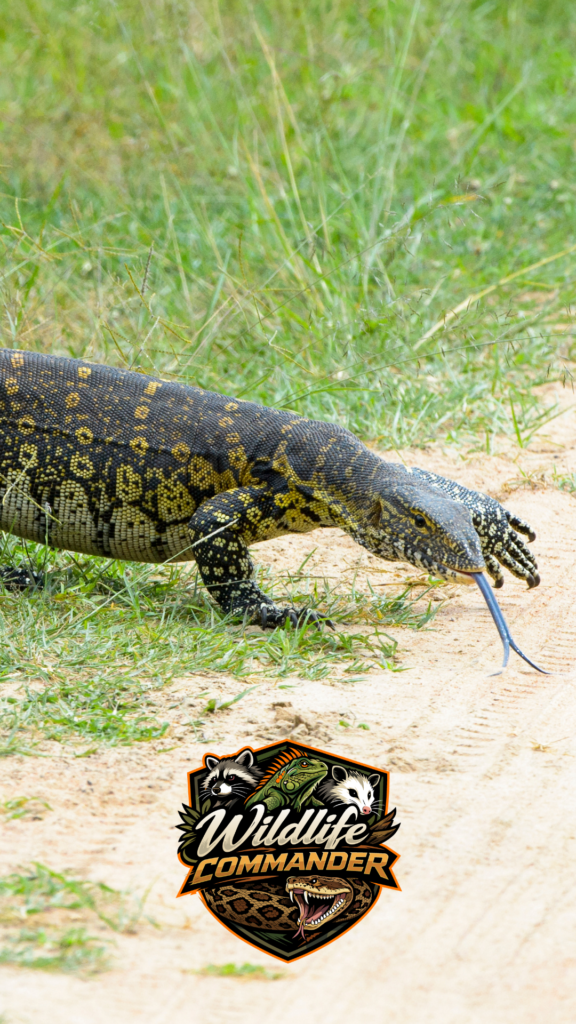
The Nile monitor (Varanus niloticus) is the species most likely to be confused with a tegu by a South Florida property owner who has not seen either before. Both are large, robust, and terrestrial. The difference matters operationally: Nile monitors are faster, more aggressive when cornered, and are capable of inflicting serious lacerations with their claws and a strong, tearing bite.
Nile monitors are well established in Lee County (Cape Coral has the largest known population) and are increasingly reported in Broward County waterfront and canal-adjacent properties. They are water-dependent in a way that tegus are not — you are more likely to find a Nile monitor near a retention pond, canal edge, or drainage easement than in a dry inland yard. Adult females lay 20 to 60 eggs per clutch in active termite mounds or decomposing organic material, making population control difficult once a breeding population is established in an area.
Black-throated monitors (Varanus albigularis) and Asian water monitors (Varanus salvator) are reported less frequently but are present in South Florida’s exotic wildlife trade background and occasionally appear in FWC enforcement records. Any large monitor lizard sighting should be treated as a reportable encounter.
FWC status: All monitor lizard species are Prohibited Nonnative Species in Florida. Standard Prohibited Species handling rules apply: no relocation, removal and humane euthanasia only.
The Legal and Physical Risks Are Both Real
South Florida property owners who discover a tegu in the yard or a python near the retention pond regularly search for DIY removal options. There are three reasons professional removal is the only practical path for Prohibited Species.
The legal framework does not permit DIY relocation. Under FWC rules, Prohibited Nonnative Species may not be relocated to any other property or released anywhere in the state. A homeowner who captures a tegu and releases it in a nearby preserve, park, or undeveloped area is in violation of Florida Statute 379.372 regardless of intent. The only legally compliant outcome is humane euthanasia on-site or surrender to a licensed operator. Most homeowners are not equipped to perform humane euthanasia under FWC guidelines, and attempting to do so incorrectly creates additional compliance exposure.
These animals are capable of causing serious injury. Argentine tegus bite with significant force and use their tails defensively. Nile monitors have serrated teeth, powerful claws, and a documented history of inflicting deep lacerations on handlers. Burmese pythons are constrictors — an adult over eight feet long is capable of killing a child or a small adult. None of these animals should be approached, cornered, or handled without training and appropriate equipment.
Capture without containment protocol typically fails. Animals cornered without proper equipment escape, go to ground, or move to adjacent properties. This displaces the problem without resolving it. Wildlife Commander uses species-appropriate containment methods that secure the animal at first contact, minimizing stress to the animal and risk to the property.
Identification to Resolution - How We Work
Step 1 — Property Assessment
A Wildlife Commander technician conducts a site assessment to confirm the species, identify signs of established activity (burrows, scat, shed skin, egg deposits), and determine the scope of the population present. Many properties with one visible animal have others. The assessment establishes a realistic picture before any removal work begins.
Step 2 — Species-Appropriate Removal
Tegus, pythons, and monitors require different containment approaches. Tegu trapping uses purpose-built cage traps positioned at confirmed burrow entrances and travel routes. Python removal is typically a direct-contact operation requiring trained personnel and appropriate restraint equipment. Monitor removal combines trapping and direct capture depending on animal behavior and access. Every removal is conducted in compliance with FWC Prohibited Species handling guidelines.
Step 3 — Compliant Disposal
All Prohibited Species removed from South Florida properties are processed under FWC-compliant protocols. Wildlife Commander documents each removal for regulatory compliance purposes and can provide removal records for HOA board reporting or insurance documentation.
Step 4 — Site Assessment and Exclusion Recommendations
Following removal, Wildlife Commander assesses the property for conditions that attracted or supported the animal — open burrow systems, food sources, accessible water features, structural gaps that reptiles use for shelter. Where physical exclusion is practical (perimeter fencing gaps, retention pond edge hardening, ornamental garden barriers), we provide specific recommendations alongside the removal report.
HOA and Commercial Tegu Pressure Is a Structural Problem, Not a One-Off Call
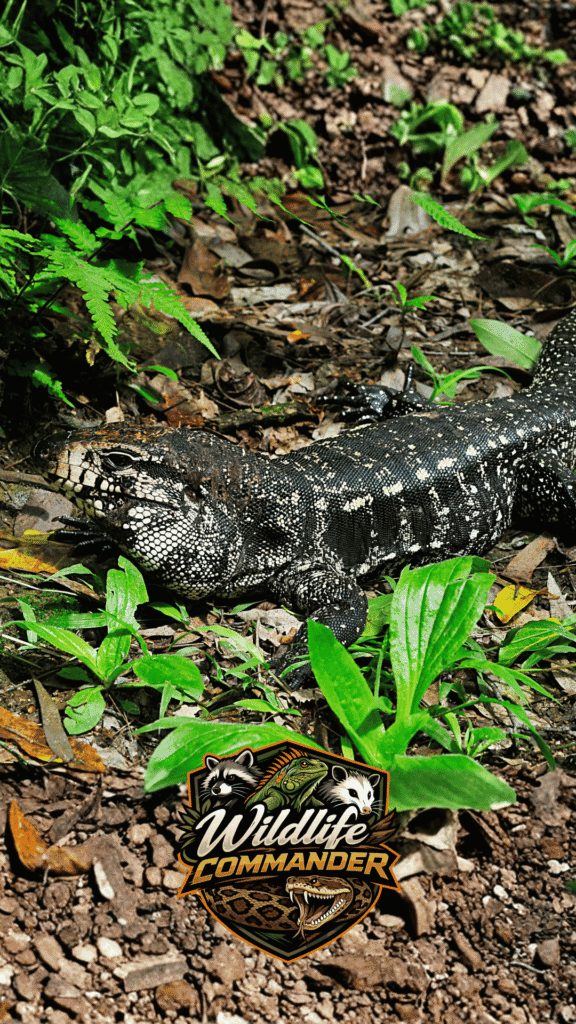
Golf courses, gated residential communities, and HOA-governed developments in western Miami-Dade, Weston, and the agricultural transition zones of western Broward County are facing tegu pressure that is not resolved by a single removal call. The landscape conditions that define these properties — retention ponds, maintained grass corridors, ornamental plantings adjacent to undeveloped land — are precisely the habitat structure that supports tegu territorial establishment.
A tegu that has established a burrow system on HOA common grounds has done so because the habitat conditions are favorable. Removing that animal without addressing the burrow system and the surrounding territory typically results in recolonization within one to three seasons.
Wildlife Commander works with HOA boards, property managers, and golf course superintendents to develop seasonal monitoring programs that track activity levels, remove animals as they’re confirmed, and provide documentation for board minutes and insurance records. The goal is a managed baseline, not the fiction of total elimination.
Waterfront commercial properties along the Intracoastal, Biscayne Bay, and Miami River corridors present a distinct monitor lizard risk profile. Nile monitors travel canal and waterway systems with ease. A commercial property with adjacent water access and minimal hardscaping at the water line is a viable monitor habitat. Wildlife Commander’s waterfront property assessments are specifically designed to evaluate water-side entry vectors that standard wildlife inspections miss.
Invasive Reptile Removal in South Florida — Frequently Asked Questions
What invasive reptiles are found in South Florida?
The three primary invasive reptile concerns in South Florida are Argentine black and white tegus, Burmese pythons, and Nile monitors. All three are established breeding populations — not isolated escapes or releases. Additional species including black-throated monitors, Argentine giant tegus, and various constrictor species are reported occasionally from FWC enforcement activity and represent the ongoing risk of the exotic pet trade. All are Prohibited Nonnative Species under Florida law.
Is the Argentine tegu dangerous to people or pets?
Argentine tegus are not apex predators and will avoid confrontation with healthy adult humans given the opportunity. A cornered or threatened tegu will bite — the jaw strength is sufficient to break skin and cause injury. Tegus present a genuine threat to cats, small dogs, rabbits, and poultry. They are documented predators of ground-nesting bird eggs and sea turtle nests. Their primary ecological impact is on native wildlife, not on human safety directly — but the animal should not be approached or handled by untrained individuals.
Are Burmese pythons in Miami-Dade County?
Yes. The established Burmese python range includes portions of western Miami-Dade County, particularly along the Everglades perimeter from Homestead and Florida City westward and north through the Big Cypress interface. Python sightings in residential areas in the western reaches of Miami-Dade — including areas near Miccosukee land and the western edges of Kendall — are documented and have increased as the population has expanded. Property owners in these areas who find a large constrictor should not approach it. Contact Wildlife Commander or FWC’s Exotic Species Reporting Hotline at 888-483-4681.
Can I trap or kill an invasive reptile on my own property?
The legal framework is more restrictive than most property owners assume. Prohibited Nonnative Species — including tegus, pythons, and monitors — cannot be legally relocated to any other location in Florida. A homeowner who captures one and releases it elsewhere is in violation of Florida Statute 379.372. Humane euthanasia on-site is the only legal outcome for anyone who captures a Prohibited Species, and FWC guidelines specify what constitutes humane euthanasia. For most property owners, the practical answer is to call a licensed operator who handles capture and disposal under the correct framework.
How do I report an invasive reptile sighting in South Florida?
FWC’s EDDMapS reporting system (IveGot1.org) allows property owners to submit sightings with photographs and GPS data. Reports contribute to the state-managed database that tracks invasive reptile range expansion and informs FWC response priorities. For an animal actively present on your property, contact Wildlife Commander directly for a same-day assessment.
What does invasive reptile removal cost in South Florida?
Cost is determined by species, property size, whether multiple animals or an established population are present, and the scope of any follow-up exclusion or monitoring work. Wildlife Commander provides free on-site assessments. For HOA and commercial properties requiring ongoing monitoring programs, a program proposal is provided following the initial assessment. There is no quote that is meaningful before someone has looked at your property.
Does Wildlife Commander handle reptile removal in the Florida Keys?
Yes. Wildlife Commander operates throughout Monroe County. Invasive iguana removal — Wildlife Commander’s founding vertical — has been active in the Keys for years. Tegu sightings in the Upper Keys have been reported, and FWC’s 2026 cold-stun response activity generated removal data across the Keys corridor. If you have seen an unfamiliar large reptile on your property, contact Wildlife Commander for an identification assessment before drawing conclusions about species or appropriate response.
Invasive Reptile Removal Across South Florida
Wildlife Commander provides invasive reptile identification, removal, and commercial monitoring services throughout:


Call (305) 200-9821 or submit a free estimate request to schedule an assessment. ¡Hablamos Español!
If You've Seen It, It's Already Established
Invasive reptiles don’t wander onto properties randomly. A sighting on or adjacent to your property is a signal worth investigating before the population grows. Schedule an assessment — we identify the species, document what’s present, and give you a clear picture of what resolution looks like.