

Commercial Wildlife Removal for Property Managers

Wildlife Management Services for Property Management Companies in South Florida | Wildlife Commander

A property management company operating across South Florida is managing wildlife problems at multiple sites simultaneously — whether or not it is organised to do so. The call from a condo board about bats in the attic, the HOA resident complaint about iguanas on the seawall, the tenant at the commercial strip reporting a large lizard in the parking lot: these arrive on different days, at different properties, and get handled by whoever answers the phone. Different operators. Different documentation standards. No consolidated record. No pattern analysis. And when a claim arises — structural damage, slip and fall, health incident — a paper trail that cannot demonstrate consistent, professional management.

Wildlife Commander provides licensed wildlife removal, exclusion, and ongoing monitoring for property management companies operating multi-site portfolios across South Florida. The service is built around what property management actually requires from a wildlife vendor: consolidated account management, site-specific documentation, consistent operator quality across the portfolio, and a monitoring structure that converts reactive call-by-call response into a defensible management programme.

The Wildlife Management Problem in Property Management Is Organisational, Not Just Operational

Property management companies in South Florida manage an enormous range of property types — residential condominiums, HOA communities, commercial strips, mixed-use buildings, single-family rental portfolios. Each property type has a different wildlife profile. Each property has a different set of conditions driving its specific wildlife pressure. And each generates wildlife calls that arrive without warning and need resolution without delay.

The default response to this complexity is ad hoc vendor management: call whoever is available, close the ticket, move on. It is the path of least resistance in a high-volume management environment. It is also the most expensive path available and the one that creates the greatest liability exposure for the management company and the property owners it represents.

Ad hoc wildlife management produces no documentation trail that is useful in a claim situation. It produces no pattern analysis that could identify a property whose seasonal wildlife pressure is driving disproportionate cost. It produces no consistency of operator quality — the result on one property may be a licensed, documented removal; on another, a call to someone whose qualifications were never verified. And when a property owner asks what wildlife management programme is in place for their asset, the honest answer is: there isn’t one.

A consolidated Wildlife Commander portfolio account changes this. One licensed operator. One documentation standard across every site. Monitoring programmes built into the account for properties with active or recurring wildlife pressure. A single escalation contact for urgent calls. And a reporting structure that gives the management company something it can actually use — in client presentations, in insurance discussions, and in claim situations.

commercial wildlife removal south florida

What a Portfolio Account Looks Like in Practice

A Wildlife Commander property management portfolio account is structured around the actual composition of the portfolio. It is not a residential removal account with a commercial label on it.

Account setup begins with a portfolio intake — a review of every property type in the management company’s portfolio, the known wildlife pressure at each site, and the reporting and communication requirements of the management company’s workflow. From that intake, Wildlife Commander establishes:

A tiered site classification.

Properties with active, documented wildlife pressure receive scheduled monitoring visits. Properties with low current activity are set for annual inspection and on-call response. The account is not a uniform monthly visit to every site — it is a calibrated programme based on actual site need.

A consolidated documentation standard.

Every site interaction produces a written record: inspection reports, removal and exclusion proposals, removal logs, monitoring visit reports. These are maintained site by site and are accessible to the management company for any property in the portfolio at any time.

A single escalation protocol.

Urgent wildlife calls — bat colony discovery, invasive reptile sightings, structural intrusion events — go through one contact at Wildlife Commander, regardless of which site or which property type is involved. Response time is defined in the account agreement.

Reporting for property owners.

For management companies that need to report wildlife management activity to individual property owners, Wildlife Commander can provide site-specific documentation formatted for that purpose. If a property owner asks what the management company is doing about the iguana problem on their HOA common area seawall, the answer is a written inspection report, a removal record, and a monitoring visit log — not a verbal description of what happened.

Species Across a South Florida Property Portfolio

The wildlife profile of a South Florida property management portfolio is determined by geography and property type. A portfolio concentrated in Miami-Dade will have a heavier iguana and invasive reptile profile than one concentrated in Palm Beach County. A portfolio with significant waterfront assets will have a different bird pressure profile than an inland suburban portfolio. Wildlife Commander’s site assessment methodology accounts for these differences rather than applying a generic species list to every property.

Iguanas

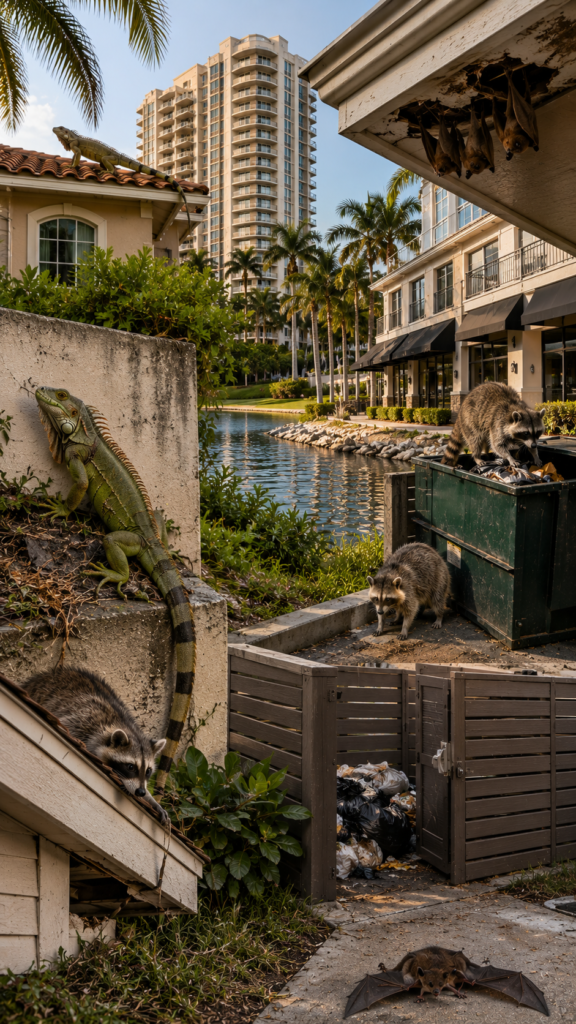
Iguanas are the dominant species concern across most South Florida property portfolios. HOA common areas, condominium grounds, waterfront property seawalls, and any site with ornamental plantings adjacent to warm hardscape are recurring iguana pressure points. Green iguana is a FWC Prohibited Nonnative Species — removal, not relocation, is the only compliant outcome.

Raccoons

Raccoons are year-round across the South Florida residential and commercial property landscape. Dumpster enclosures, food waste access points, roof access via tree canopy overhang, and attic entry through deteriorated roof soffit are the primary raccoon pressure mechanisms across a mixed residential and commercial portfolio.
Bats

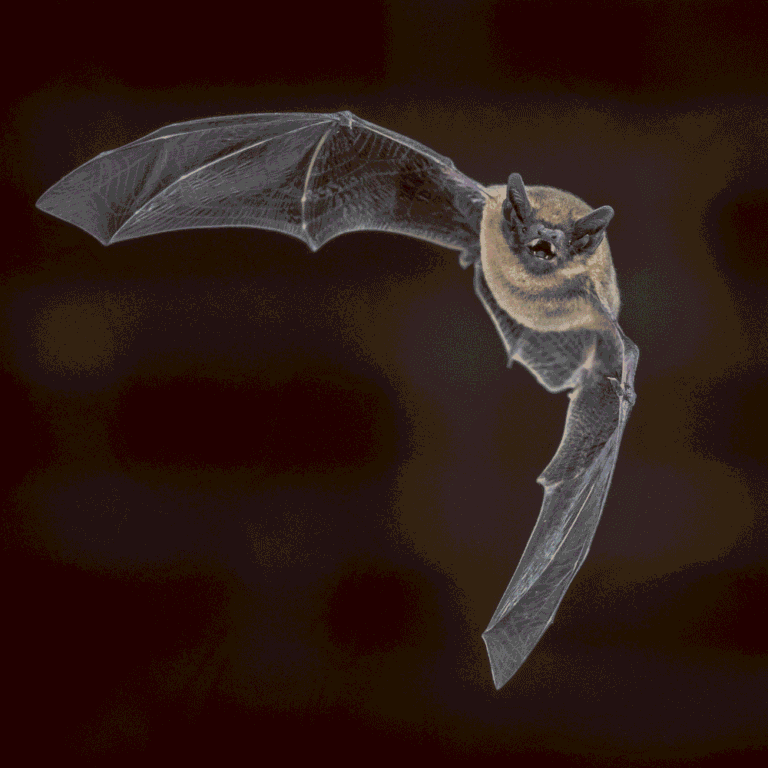
Bats present the highest regulatory complexity in South Florida properties. The federally endangered Florida bonneted bat requires strict compliance, especially during maternity season (April–August). Properties with known bat activity require professional assessment before exclusion, as improper handling can create significant regulatory and liability exposure.

Birds

Birds generate maintenance costs and liability exposure across commercial and multi-family residential properties — guano accumulation on walkways, covered parking structures, and building exteriors. Bird pressure at commercial strip centres, multi-family buildings with covered corridors, and mixed-use rooftop structures requires physical exclusion targeted to the specific perch sites rather than generic deterrent products.
Invasive Reptiles

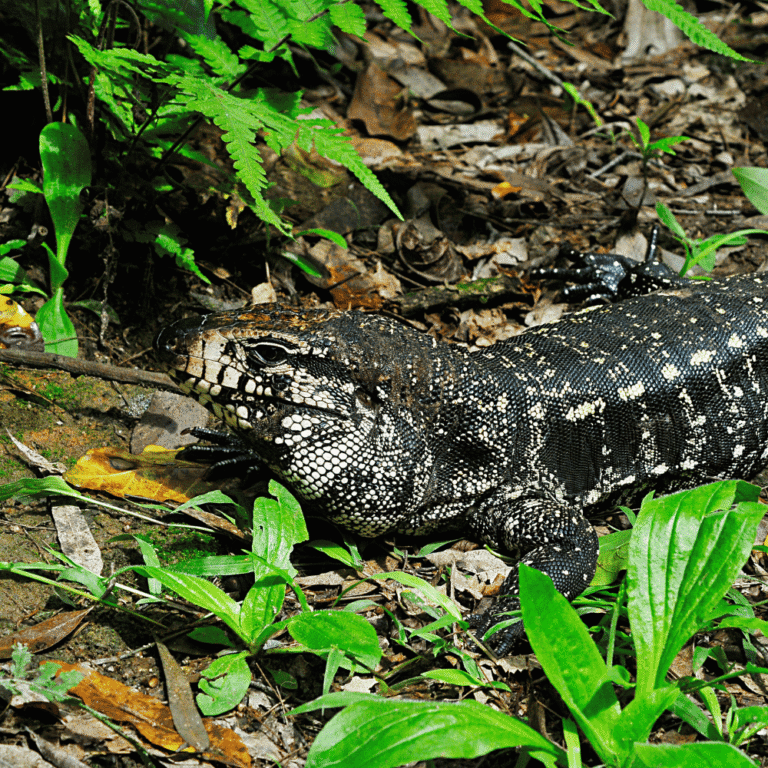
Invasive reptiles — Argentine tegus, in particular — are appearing with increasing frequency on residential and commercial properties in Miami-Dade and Broward adjacent to undeveloped land and canal corridors. Every tegu sighting on a managed property should be escalated to Wildlife Commander — these are FWC Prohibited Species and the management company's liability exposure for an improperly handled removal is re
The Liability Dimension That Property Management Companies Cannot Ignore

A property management company that does not have a documented wildlife management programme for its portfolio is carrying an undisclosed liability that it may not have quantified.

When a resident or tenant sustains a wildlife-related injury on a managed property — a slip on guano-contaminated walkway, a bat encounter in a common area, a raccoon bite near a food service area — the management company is in the chain of liability. The question of whether the management company took reasonable steps to manage known wildlife hazards is answered by the documentation record. No documentation, no defensible answer.

This is not a reason to build a wildlife management programme based on liability anxiety. It is a reason to recognise that a documented programme — inspection reports, removal records, monitoring logs, escalation protocols — serves the management company’s interests as much as it serves the properties under management. Wildlife Commander’s portfolio account structure produces that documentation as a standard output, not as an optional add-on.

Talking to Property Owners About Wildlife Management

Management companies that operate a Wildlife Commander portfolio account have something concrete to offer property owners when wildlife management comes up — which, in South Florida, it will.

A written inspection report for a property with known iguana pressure is a demonstrable deliverable. A monitoring visit log that shows six-monthly site checks and documented removal activity is evidence of proactive management. A bat exclusion plan that was developed and timed to the regulatory window is evidence that the management company is operating with licensed, compliant vendors.

Wildlife management in South Florida is not a peripheral concern for property owners. Iguana seawall damage, bat colonies in attic structures, and raccoon intrusion events are recurring line items in property budgets. A management company that can show a structured, documented approach to managing these costs is offering something its competitors who use ad hoc operators cannot.

Frequently Asked Questions

Yes. Wildlife Commander’s portfolio account structure covers multiple properties under a single commercial agreement. Site-specific documentation is maintained separately; account management, billing, and escalation are centralised. Portfolio account pricing is structured based on total portfolio composition — contact Wildlife Commander to discuss the specifics of your portfolio.

Portfolio account holders have a defined escalation protocol for calls outside the monitoring schedule. Urgent situations — bat colony discovery, large invasive reptile sighting, structural intrusion — are handled through a priority response channel. Standard unscheduled calls are typically scheduled within three to five business days.

Wildlife Commander provides written inspection reports, removal and exclusion proposals, removal logs, and monitoring visit records for every site interaction. Documentation is available in PDF format and can be structured to fit the management company’s reporting workflow. If a property owner requires site-specific reporting, that documentation can be formatted separately from the portfolio account summary.

A bat colony discovery on a managed property requires an assessment before any removal or exclusion work proceeds. Wildlife Commander can inspect the property and identify the species present, the structural access points, and the regulatory constraints applicable to the specific situation. If the colony includes Florida bonneted bat — federally endangered — the response pathway changes from standard bat exclusion, and this needs to be confirmed before any work is scheduled. Contact Wildlife Commander immediately on any bat discovery; do not attempt to seal access points before an assessment.

Yes. FWC licensing and the FWC Prohibited Nonnative Species framework apply statewide. County-specific requirements — such as Monroe County’s regulations governing iguana removal on public and private property — are known and applied in our assessments for properties in those jurisdictions. Wildlife Commander operates under the appropriate licensure for all in-scope species across Miami-Dade, Broward, Palm Beach, and Monroe County.

Yes. Wildlife Commander’s standard documentation — inspection reports, removal records, monitoring logs — is structured to be legible and useful for insurance disclosure, vendor compliance verification, and legal review. If a management company’s insurance carrier or a property owner’s insurer requires specific documentation formats, contact Wildlife Commander to discuss the requirement before account setup.

Scroll to Top